
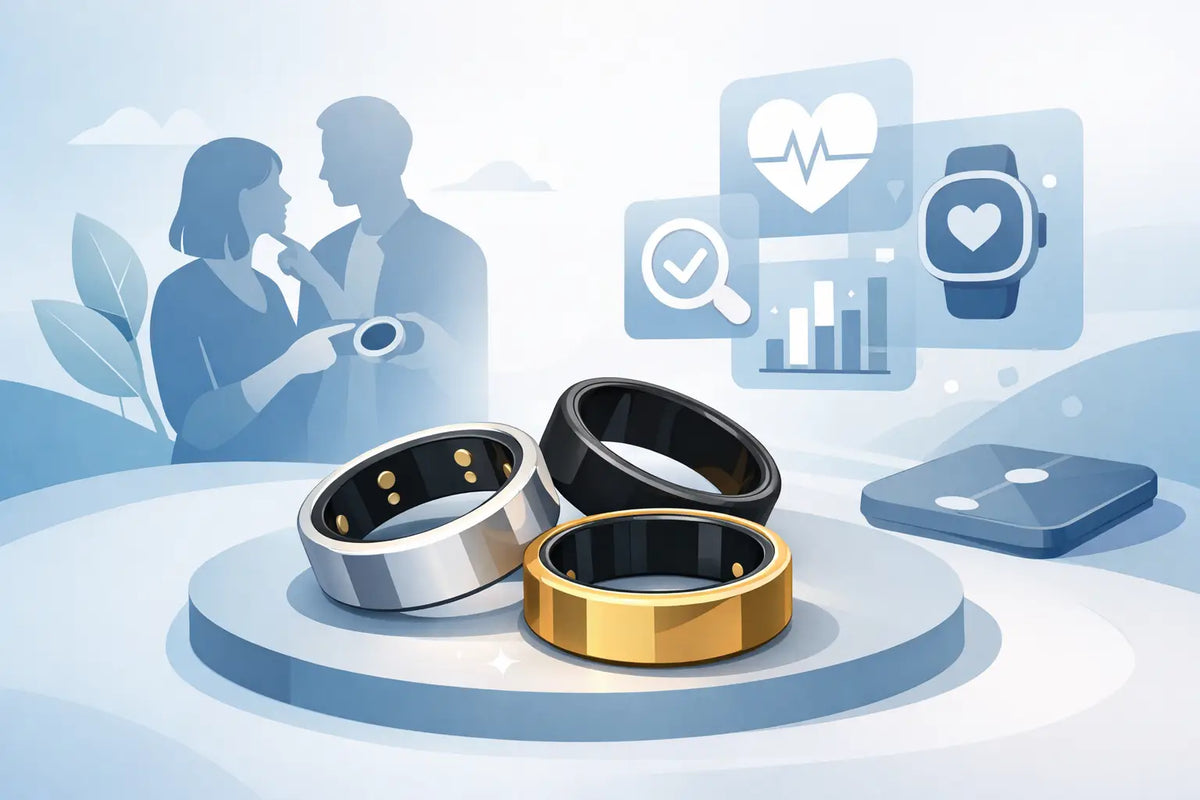
A ring that matches your outfit while showing how restful your night really was: that is exactly the appeal of a smart ring. Anyone looking to buy a health ring is usually not looking for another notification hub on their wrist. They want an inconspicuous companion that makes health data easy to understand, fits comfortably, and is pleasant to wear every day.
A health ring can help you understand sleep, activity, and recovery in your daily life. The data does not replace a medical diagnosis. However, it can help you identify patterns: Why do you feel fit some mornings and not others? How does your activity level change throughout the week? And when is it worth consciously giving your body more rest?
Buying a health ring: These criteria matter
The best ring is not automatically the one with the longest list of features. What matters is whether it fits your life. If a wearable feels bulky, disturbs you while you sleep, or doesn't match your style, it will quickly end up in a drawer. A well-chosen smart ring, on the other hand, will naturally become part of your routine.
First, pay attention to the metrics that are relevant to you. For many people, sleep analysis is the main focus. A ring can track sleep duration, sleep stages, and overnight recovery, and derive an easy-to-understand assessment from this. This is particularly helpful if you want to sleep not only longer but also more consciously.
Activity tracking is just as important. Steps, movement, and calorie consumption give you a more realistic view of your daily activity. This can motivate you to fit in a walk on quiet workdays, or show that a free evening after an intense workout is exactly what you need.
Metrics such as heart rate, heart rate variability, and body temperature trends can also provide valuable insights. The benefit does not come from a single number, but from the trend over days and weeks. One bad night's sleep is normal. Recurring changes turn data into a basis for better habits.
Design is not an afterthought
Smartwatches are practical, but they are not the right choice for everyone. Some people do not want to wear anything on their wrist at night, while others want an accessory that looks discreet at the office, at dinner, or during a workout. A health ring combines these requirements: It sits lightly on the finger, does not need a conspicuous display, and can be combined with different looks.
Therefore, choose not only based on technology, but also on color, finish, and shape. You are more likely to wear a ring that you find aesthetically pleasing. And only data from consistent use can provide a meaningful picture of your habits.
The right ring size determines comfort and data
With a health ring, size is more than a matter of style. The sensors should lie close and stable against the skin without pressing or constantly twisting during movement. If the ring is too loose, the quality of the measurements can suffer. If it is too tight, it becomes uncomfortable in everyday life—especially since fingers can easily swell in the heat, during exercise, or in the morning.
Ideally, do not measure your finger just once. Try the chosen size at different times of the day and wear a ring sizing tool overnight as well. This way, you will quickly notice if the ring remains comfortable when washing your hands, typing, sleeping, and exercising. Many people prefer the index, middle, or ring finger, but there is no one-size-fits-all solution.
A professional ring sizing tool reduces exactly this uncertainty before purchase. At Fitorb, finding the right size is part of the purchasing process so that you do not have to guess. If the size still does not fit, a free exchange provides additional peace of mind.
Which features do you really need?
Anyone using health data in everyday life for the first time benefits above all from a clear app and easy-to-understand assessments. Complicated charts may impress on the first day. In the long run, metrics help you more if you can immediately recognize what they mean and what small change might make sense as a result.
For most users, these areas are particularly relevant: sleep quality and sleep rhythm, daily activity, heart rate, and recovery. A readiness or recovery score can, for example, help you better adapt training and exertion to how your body feels. If you feel tired and the ring simultaneously shows low recovery, a leisurely walk may be the better choice than your next personal best.
However, it depends on your priorities. If you want to see sports data directly on a display during a workout, a smartwatch may be the more suitable addition. If you are looking for discreet, continuous insights and want to monitor your sleep without a disruptive device on your wrist, a ring plays to its strengths.
Also pay attention to how it is used in everyday life. The data should be easy to read in a smartphone app and not require explanation every morning. A wearable should provide guidance, not create an additional to-do item.
Use health data effectively instead of just collecting numbers
A health ring works best as a personal mirror, not a strict coach. No one has to reach a peak value every day. A low activity score after a long day of travel or a restless night before an important appointment is not a failure. It is context.
Therefore, look at trends. For example, compare your sleep metrics on days with late meals, alcohol, intense exercise, or lots of screen time in the evening. Often, connections become visible that are difficult to grasp without regular tracking. Perhaps a consistent bedtime noticeably improves your recovery. Perhaps you notice that a short evening walk does you good.
It remains important: consumer data is not a medical examination. In case of symptoms, persistent changes, or health questions, medical advice should always come first. The ring can help you describe observations more concretely and pay more conscious attention to your body's signals.
What else matters when buying
A good price is attractive, but it should not be the only criterion. Check what happens around the product: Is there an easy-to-understand size guide? How straightforward is an exchange? Do you have enough time to test the ring in your real routine? Especially with a wearable, it is only after several nights and normal workdays that you can tell whether the wearing experience and assessments are convincing.
A trial period with a money-back guarantee takes the pressure off the decision. Free shipping, an easy size exchange, and accessible customer support are not minor details, but part of a relaxed purchase. After all, you are not just investing in a ring, but in a product that will accompany you for as long as possible.
Read reviews with a concrete focus: Do customers mention the fit, everyday usability, sleep analysis, or service? Such experiences are often more helpful than general star ratings. At the same time, your comfort, goals, and ring size remain individual.
A ring that fits your routine
The most sensible time for a health ring is not just the next big fitness plan. It makes sense when you want to understand your daily life better. Wear it at night, at the office, on your way to exercise, and on quiet weekends. Only this combination shows how exertion and recovery actually alternate.
Start relaxed: Observe your metrics for two to three weeks first, without trying to change anything every day. Then choose one habit, such as a consistent bedtime or more activity in everyday life. A health ring provides the insights—you make the small decisions that do you good.

Leave a comment
This site is protected by hCaptcha and the hCaptcha Privacy Policy and Terms of Service apply.