
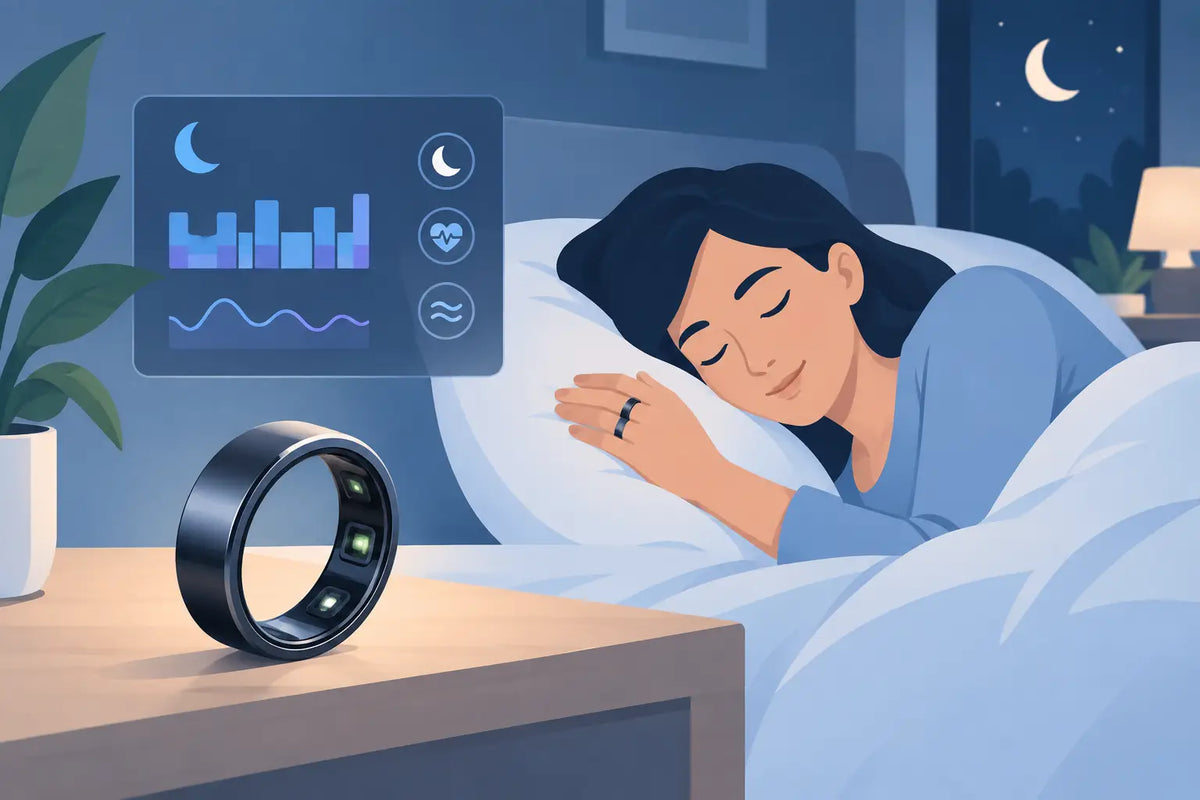
If you wake up tired in the morning despite spending eight hours in bed, the answer is rarely found in a single number. Using sleep data from a ring means no longer just estimating how you slept, but recognizing patterns: When do you really unwind? How well-rested does your body seem? And what small habit might be costing you energy for the next day?
A smart ring accompanies you discreetly—without a glowing display on your wrist and without requiring you to wear a watch at night. It measures in the background, turning your nights into clear insights for everyday life. The goal is not to perfectly control every minute of sleep. It is about making better decisions that feel good in the long term.
Using sleep data from the ring instead of just looking at it
Many people open their app in the morning, see a sleep score, and close it again. This is understandable, but it misses the real benefit. A single value can give you a general idea, but it does not automatically explain why you feel fit or exhausted.
Sleep data becomes meaningful when you look at trends over several nights. A low score after a party, a late dinner, or a particularly stressful workweek is no cause for concern. If the pattern repeats, it can lead to a useful insight. Perhaps your recovery drops significantly on days when you consume caffeine late. Perhaps you sleep longer on weekends but still feel less refreshed because your bedtime varies widely.
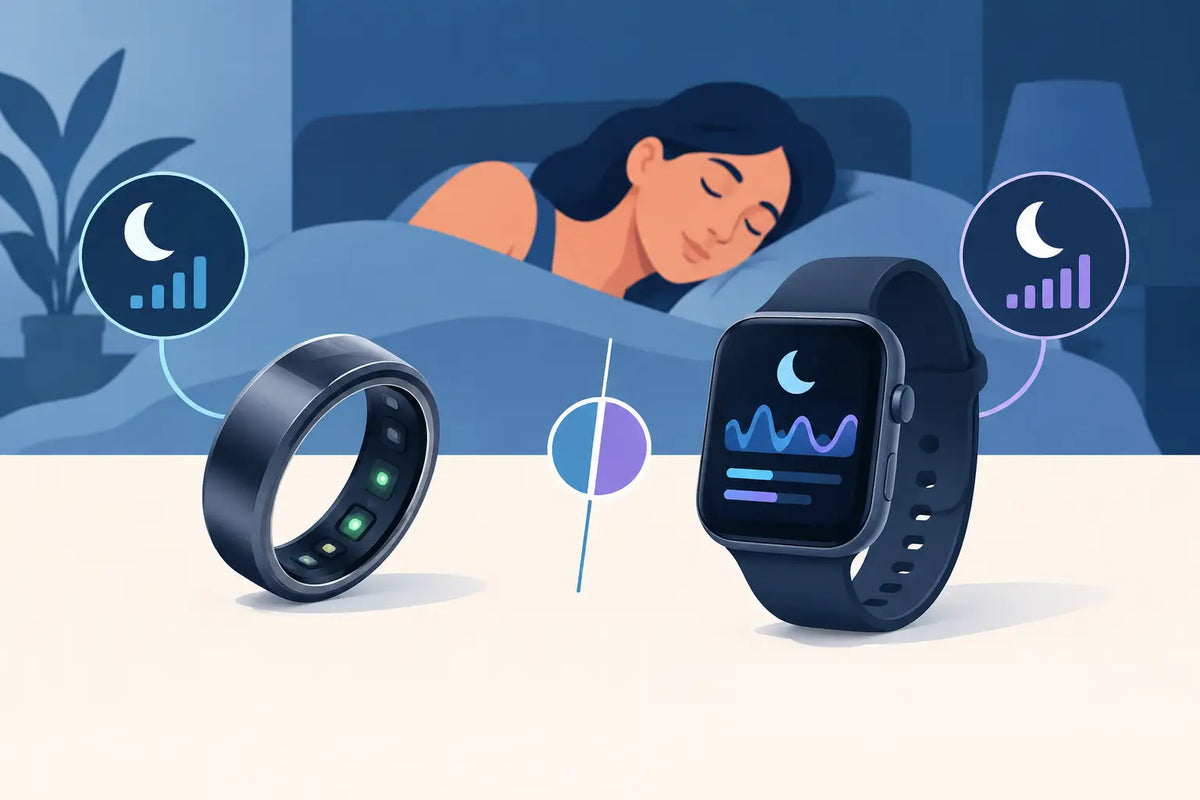
Depending on the model, the ring can capture sleep duration, time to fall asleep, wakefulness, resting heart rate, heart rate variability, and temperature trends. These values are not a medical diagnosis. However, they provide you with a personal data trail that is often clearer than your gut feeling after a hectic week.
Precisely because a ring sits so discreetly, it is particularly practical for nighttime use. The Fitorb™ Smart Ring Pro combines this discreet wearability with a design that also suits your style during the day. This way, data does not remain part of a fitness project that ends after two weeks, but becomes part of a habit that is easy to maintain.
Which sleep metrics really provide guidance
Not every metric deserves the same attention in the morning. If you focus on too many details, you will quickly become anxious—and that is exactly what does not help your sleep. Focus first on the metrics that best explain your everyday life.
Sleep duration and consistency
Sleep duration is the obvious starting point. However, it is not just a matter of whether you were in bed for seven or eight hours. Pay attention to how much time you actually spend sleeping and how consistent your rhythm remains.
If your bedtime on weekdays is 11 p.m. and regularly slips to 2 a.m. on weekends, your body feels this shift. A ring helps you make the difference visible. You do not need to plan every evening down to the minute. Even maintaining a similar time window can make your mornings noticeably calmer.
Wakefulness and sleep interruptions
Short moments of wakefulness during the night are normal. No one sleeps continuously like they are switched off. It becomes relevant when you lie awake frequently or for long periods and this continues over several nights.
Then check not only the app, but also your surroundings: Is the bedroom too warm? Are you getting phone notifications? Do you eat or drink very late? Sleep data provides the clue, but the appropriate change usually takes place in real life.
Resting heart rate and recovery trend
Your resting heart rate during the night can show how well your body is winding down. If it is above your personal normal range, it may be related to late alcohol consumption, intense exercise, stress, a heavy meal, or the onset of physical strain. A single outlier says little. A recurring trend is much more interesting.
Heart rate variability can also serve as a recovery indicator. Simply put, it shows how adaptable your nervous system is at the moment. High or low values are not interpreted the same way for everyone. Therefore, compare your own weeks with each other rather than measuring yourself against someone else's ideal values.
Correctly interpreting sleep phases
Deep sleep, REM sleep, and light sleep may seem like a report card for the night at first glance. In fact, these phases naturally fluctuate. Wearables can also only approximately capture sleep phases, not as precisely as a medical sleep study.
Therefore, use the phases as guidance, not as a judgment. If you feel rested and your progress remains stable, there is no reason to get nervous about a single unusual night. If you are persistently exhausted, snore loudly, or suspect sleep apnea, you should have it checked by a doctor—regardless of what your ring shows.
How data becomes better evening routines
The best way to achieve better nights is not a radical plan. Test one change at a time for seven to ten days and observe what happens. If you simultaneously cut out coffee, exercise earlier, eat differently, and banish your phone, you will not know in the end which measure really helped.
A sensible first test could look like this:
- Move caffeine to the morning on most days.
- End intense exercise sessions as several hours before bedtime as possible.
- Keep your bedtime within a realistic time window.
- Put your smartphone out of reach before falling asleep.
Not every bad night of sleep needs optimization
The desire for better metrics can quickly turn into performance pressure. Sleep cannot be forced. If you look at the clock frantically at 10 p.m. because the target time is approaching, you are more likely to create additional tension.
Therefore, give your ring the role of a calm companion. It is meant to make connections visible, not to judge your night. A bad night after a special occasion is part of a normal life. What matters is how your recovery develops on average and whether you are capable, focused, and balanced during the day.
It also depends on your phase of life which data is relevant to you. Parents of young children, shift workers, or people with changing travel schedules cannot follow a rigid sleep rhythm. That is precisely when it is helpful to see which small adjustments work despite an irregular daily routine: a dark room, a fixed pre-sleep routine, or a short walk in the afternoon.
From morning analysis to better daily planning
Sleep data does not only help in the evening. It can help you structure your day more wisely. After a restful night, perhaps the intense workout, the long project, or the meeting for which you need full concentration is appropriate. After a short, restless night, it may be more sensible to consciously start more slowly, drink enough, and adjust your workout.
This is not a free pass to cancel all plans when you have a bad score. It is an invitation to take your own body more seriously. Over weeks, you learn when you can handle strain well and when recovery is the stronger decision.
The greatest progress rarely comes from perfect sleep metrics. It comes the moment you recognize a personal pattern and really stick to one small change. Wear your ring regularly, look at trends instead of individual nights, and choose exactly one habit for the coming week that could make your morning easier.

Leave a comment
This site is protected by hCaptcha and the hCaptcha Privacy Policy and Terms of Service apply.