
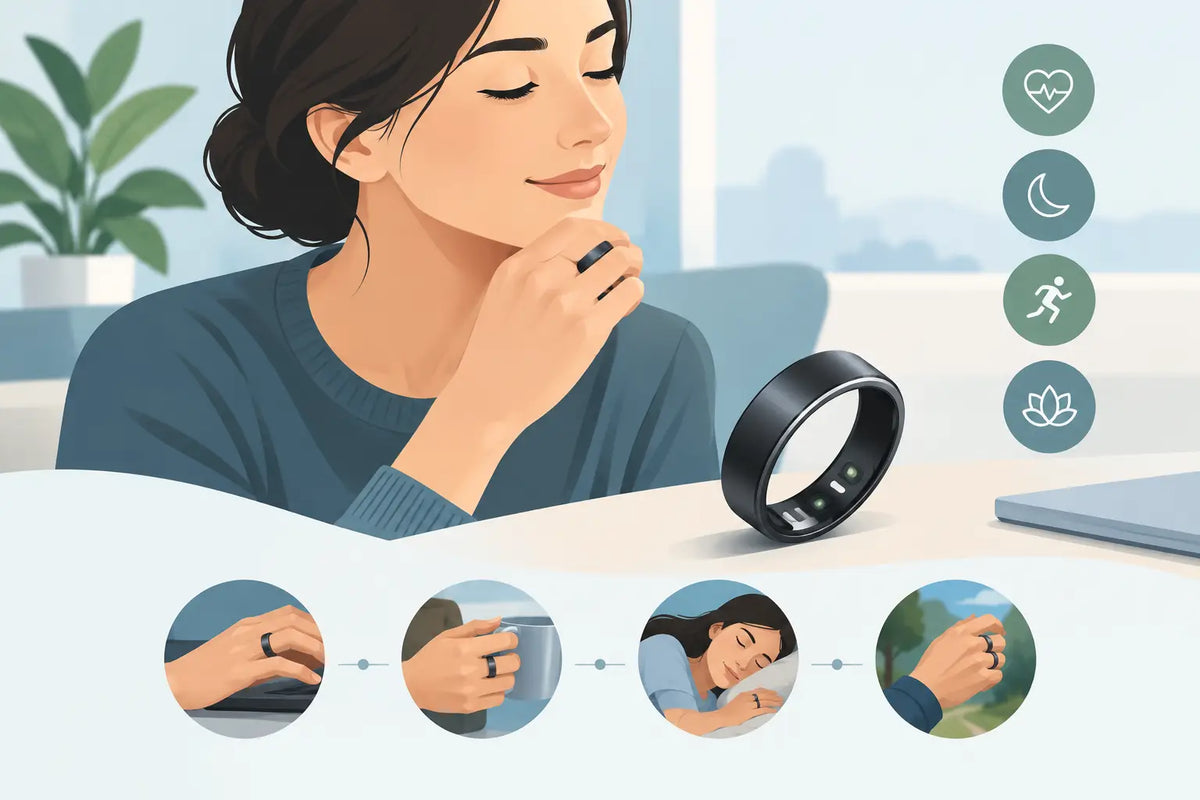
A ring that pinches at night, gets in the way when typing, or constantly draws attention when washing your hands will quickly end up in a drawer. When it comes to long-term smart ring comfort, design is not the only deciding factor, but above all, the question: Will you forget it’s on your finger after a few days? That is exactly what turns a stylish tech accessory into a health tool that truly helps you every day.
Why comfort determines long-term use
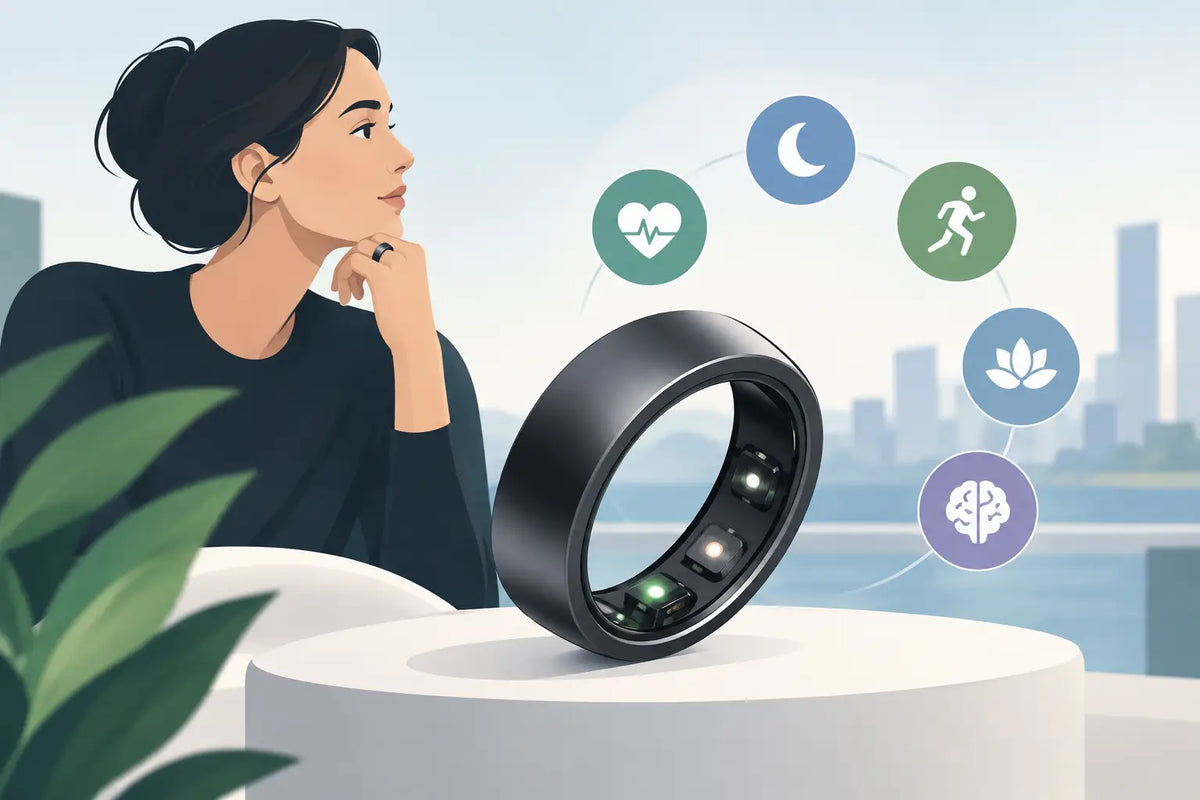
A smart ring is designed to track sleep, activity, and recovery without disrupting your daily life. Unlike a smartwatch, it sits directly on your finger—where sensors can work with great precision. But this only works if you want to wear it reliably. Even a slight feeling of pressure can lead to the ring being left on the bedside table at night. That is precisely when you miss the data that is particularly valuable for understanding your personal sleep patterns.
Comfort means more than just a smooth, pleasant material. It is created by the interplay of ring size, shape, weight, and your daily routine. Someone who works a lot on a laptop will perceive a ring band that is too wide differently than someone who is mostly on the go. Someone who does strength training has different requirements than someone who wears the ring primarily to track sleep and recovery.
The right expectation is not: The ring must never be noticeable. A ring is still a ring. However, after a short adjustment period, it should feel natural, not dig in, not spin, and not cause discomfort during normal movements.
Smart ring comfort in the long term: The first two weeks
The first few days tell a lot, but not everything. Fingers change their circumference throughout the day. Heat, exercise, salt, hydration, and even a long night can cause the ring to fit tighter in the morning and looser in the evening. A good fit must account for these natural fluctuations.
Immediately after trying it on, a ring often feels either unusually noticeable or surprisingly light. Give yourself a few days before judging. Especially if you do not usually wear rings, you will register every movement more consciously. After a week, this feeling largely disappears for many users—provided the size is right.
During this phase, pay attention to specific moments: Can the ring be removed in the morning without pulling? Does it stay securely on your finger when washing your hands and during everyday activities? Does it get in the way when picking up a coffee cup, opening a door, or writing? Such small situations show more honestly than a quick test in front of a mirror whether a ring is right for you.
The finger you choose also makes a difference. Many people wear a smart ring on their index, middle, or ring finger. The best finger is not automatically the one that looks best. What matters is where the ring sits securely and the inside maintains good contact with the skin without creating pressure points.
Every little detail counts when sleeping
For many, sleep is the most important reason to wear a smart ring. Sleep duration, sleep rhythm, and recovery can only be meaningfully assessed if the ring actually stays on your finger overnight. This is exactly where a slim, discreet design proves its strength.
A comfortably rounded ring is less likely to get caught on bed linen and is significantly less noticeable when falling asleep than a large wearable on the wrist. This does not mean that every person automatically feels nothing at night. Anyone who is particularly sensitive to jewelry or crosses their hands under their head should pay especially close attention to the size.
If the ring is too loose, it can spin during sleep. This is not only uncomfortable but can also change the sensors' contact with the skin. If it is too tight, you will often notice it in the morning when your fingers are slightly swollen. The ideal fit is secure but relaxed: The ring can be pulled over the knuckle with light resistance and leaves no lasting pressure marks.
Anyone who has previously taken off a smartwatch at night often experiences the switch as a relief. No display lights up, nothing vibrates on the wrist, and sleep is not accompanied by a bulky device. The focus remains where it should be: on your recovery.
Work, everyday life, and exercise: Where a ring can be noticeable
In the office or home office, comfort is most noticeable when typing. A smart ring can initially get in the way of the keyboard and mouse, especially if you are not used to a wide ring band. After an adjustment period, this is no longer an issue for many people. During very long writing sessions or manual work, however, it may still make sense to take the ring off temporarily.
When it comes to exercise, a lot depends on the type of training. For walks, running, cycling, yoga, or everyday steps, a ring is a discreet companion. During strength training, climbing, or training with heavy weights, metal on the finger can be uncomfortable and may scratch over time. In these cases, taking it off is often the better decision. Health data is valuable, but comfort and safety come first.
A ring also works well for cooking, cleaning, and washing your hands as long as it does not constantly demand attention. A smooth, high-quality design can be easily integrated into everyday life. Nevertheless, the rule applies: When working with strong pressure on the hands, harsh cleaning agents, or tight protective gloves, you should take the ring off.
This is not a disadvantage, but a realistic expectation. A smart ring does not have to stay on your finger in every single situation to give you a meaningful picture of sleep, activity, and recovery. What matters is regular use during the moments that shape your habits.
The right size is your greatest comfort lever
Even the best sensor technology cannot compensate for an unsuitable size. Too large means frequent spinning, an insecure feeling, and potentially fluctuating skin contact. Too small leads to pressure, difficulty removing it, and wanting to take the ring off precisely when it is supposed to collect data at night.
Therefore, do not measure just once in the morning. Check the chosen finger in the morning, afternoon, and evening. Also test how a comparable ring feels after a walk, after exercise, or at warmer temperatures. These situations reflect your real everyday life.
A digital ring-measuring tool and free exchange if the size is wrong take unnecessary pressure out of the purchasing decision. At Fitorb, this is exactly part of the concept: You should not have to guess, but rather choose the size with confidence and be able to test the ring in everyday life. The 30-day trial period additionally creates space to honestly check whether the ring fits your life.
Small habits for a better wearing experience
A few simple routines make a noticeable difference. Clean the inside regularly with a soft, slightly damp cloth so that skincare products, soap, or sweat do not form a film. Put the ring on so that the sensor side sits reliably against the skin, and check the fit after intensive training or on very warm days.
If you wear several rings on the same hand, make sure there is enough space between them. Rings that constantly bump into each other can feel uncomfortable and get scratched more quickly. If your fingers swell significantly or the ring suddenly pinches, take it off instead of forcing it over the knuckle.
In the end, the best smart ring is the one you do not have to consciously motivate yourself to put on. Choose the size, finger, and wearing moments so that the ring fits your everyday life—then the data collected quietly will gradually become habits that feel really good.

Leave a comment
This site is protected by hCaptcha and the hCaptcha Privacy Policy and Terms of Service apply.