
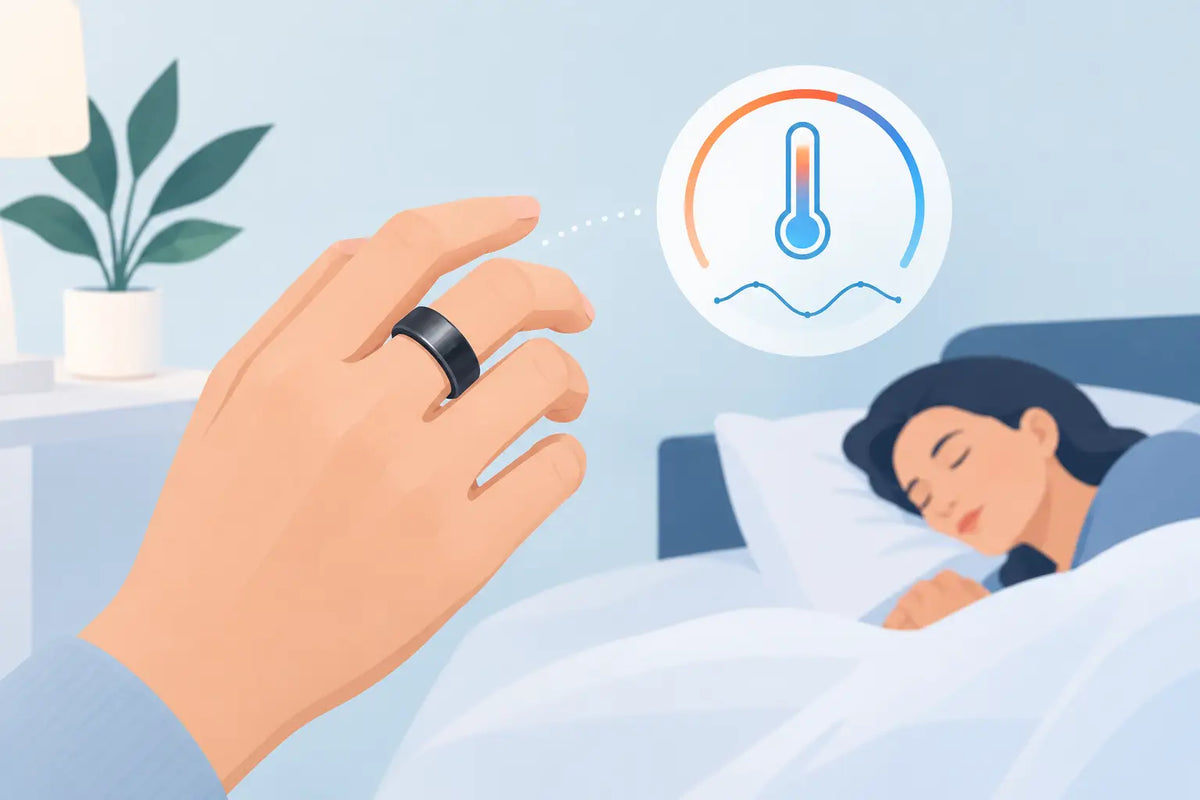
After a restless night, you often feel it as soon as you get up: heavier, more tired, less rested. If a ring measures body temperature, it can supplement this gut feeling with an additional data point. The key is exactly what is measured - and how to correctly interpret the values in your everyday life.
A smart ring usually does not provide a classic fever measurement like a thermometer. Instead, it records changes in skin temperature on the finger overnight and detects trends compared to your personal normal range. That is exactly where the practical benefit lies: Not a single value is the focus, but the development over several nights.
Does a ring measure body temperature or skin temperature?
The short answer is: A smart ring normally measures the temperature on the skin, not the core body temperature. Core body temperature describes the temperature inside the body and is determined medically with suitable measurement methods. A ring, on the other hand, sits on the skin and registers the smallest changes there.
This is not a disadvantage, as long as expectations are correct. Skin temperature is influenced by many factors: room temperature, blanket, blood circulation, alcohol, late eating, stress, or particularly intense training. Therefore, a single measurement value without context would be of little significance.
Modern rings compare these fluctuations with your individual baseline. They then show you, for example, whether your nighttime temperature was higher or lower compared to previous weeks. This turns a number into an understandable trend.
Why temperature trends on the finger are so valuable
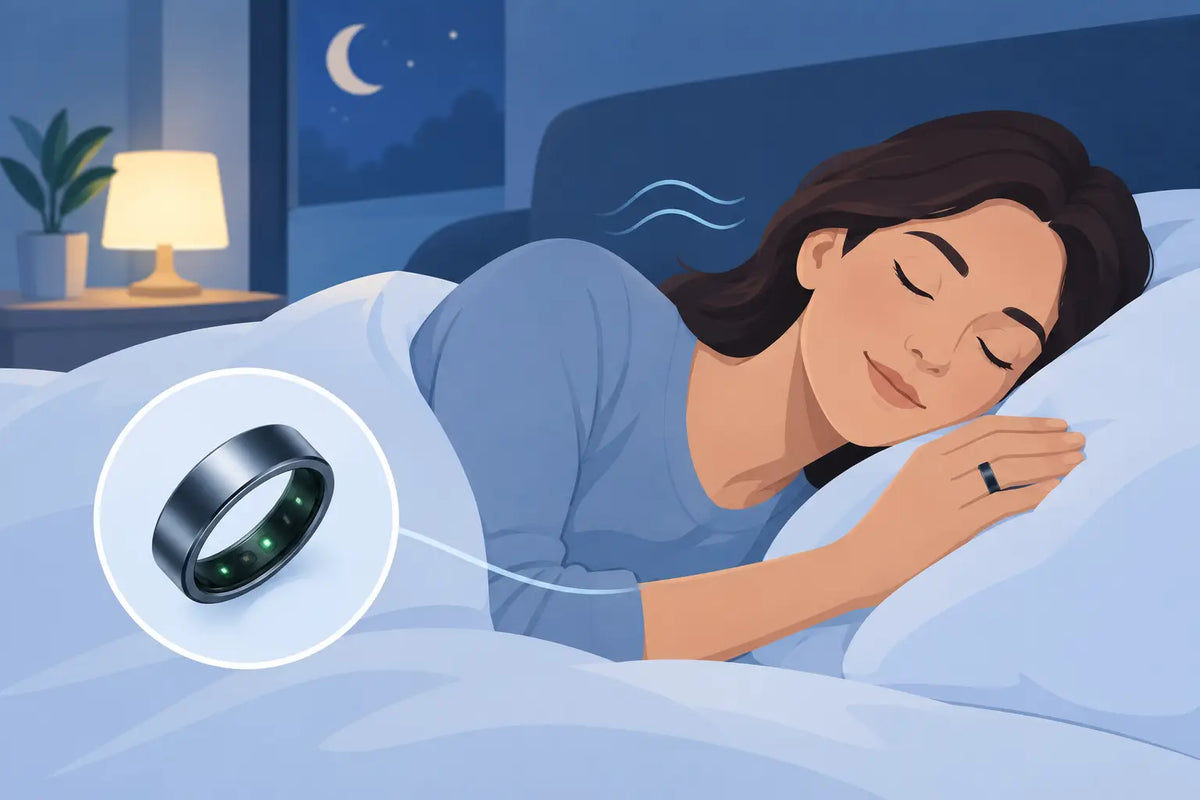
The finger is a sensible measurement location for a smart ring. The sensor lies close and constantly against the skin, without you having to wear a display at night or feel a watch on your wrist. Anyone who wants to analyze sleep as undisturbed as possible appreciates exactly this discreet form of tracking.
Temperature data becomes particularly interesting when it interacts with other values. These include heart rate, heart rate variability, sleep duration, movement data, and your personal daily form. If the temperature is above your usual range and your resting heart rate changes at the same time, this can be a sign that your body needs more rest.
This does not automatically mean that you are sick. Perhaps your bedroom was unusually warm. Perhaps you celebrated, slept little, or trained later than usual. But if a pattern persists over several days, it becomes easier to act more consciously: reduce training, prioritize sleep, drink enough, or seek medical advice in case of symptoms.
Small changes instead of dramatic diagnoses
A good ring does not turn health data into a fear machine. Rather, it helps you notice changes early. Especially people with busy schedules easily overlook the first signals of their bodies because appointments, training, and everyday life continue.
Temperature trends can give you a reason to pause briefly. How was the night? Do I really feel resilient? Should movement today be light instead of intense? These questions are more valuable than trying to derive a diagnosis from a single number.
What a smart ring can detect in temperature measurement
Depending on the model and app analysis, temperature data can make different connections visible. They are particularly helpful for sleep and recovery because the measurement at night takes place over many hours as quietly and evenly as possible.
In many people, the temperature changes in a typical way during sleep. Deviations from the personal pattern can be related to stress, unusual exertion, jet lag, a developing cold, or hormonal changes. For people with a menstrual cycle, the temperature development can also be an additional clue to cycle-related patterns.
It remains important: The ring detects correlations, not causes. It does not know if you left a window open, drank a glass of wine, or slept with worries on your mind. Only your habits and personal context make the data truly useful.
This is how the measurement values become more reliable
For meaningful temperature trends, a smart ring needs above all regularity. Wear it on the same finger every night as much as possible. A ring that is too loose can impair sensor contact. A ring that is too tight is uncomfortable and should also not serve as a permanent solution.
Also give the system time to learn your normal range. After a single night, hardly anything can be classified meaningfully. After several weeks, however, a personal picture emerges of how your body reacts to training, sleep rhythm, travel, or stressful phases.
Your sleep environment also counts. Very warm nights, a heated blanket, or an unusually cold bedroom can influence temperature values. This does not make the data worthless - it only reminds us that technology accompanies everyday life instead of judging it perfectly from the outside.
What you should pay attention to when wearing it
A clean sensor and a well-fitting ring are the foundation. Ideally, wear the ring so that it does not constantly rotate and the sensors lie stably on the inside. If your fingers swell up or down significantly during the day, another finger may be the better choice at night.
The right size is also more than a comfort question. It also determines whether sleep, pulse, and temperature data are consistently recorded. Therefore, anyone who is unsure before purchase should use a ring measurement tool and carefully check the size - this ensures a significantly better wearing experience later.
Can a ring measure fever?
No, a smart ring does not replace a medical thermometer or a medical assessment. If you suspect you have a fever, feel sick, or have severe or persistent symptoms, measure with a suitable thermometer and consult medical professionals if necessary.
The difference is simply: A thermometer is intended to provide as accurate a temperature as possible at a specific point in time. A ring, on the other hand, continuously observes relative changes on the skin. Its strength lies not in acute diagnostics, but in the long-term view of your routine and recovery.
Precisely because of this, both approaches complement each other well. The ring can make noticeable deviations visible. The thermometer gives you a direct, medically more suitable measurement in case of a concrete suspicion.
For whom is temperature tracking on the ring worth it?
Temperature tracking is suitable for people who want to better understand their sleep and exertion without wearing a large smartwatch at night. It is particularly interesting for professionals with changing stress phases, female and male athletes who want to plan their recovery more consciously, as well as for everyone who wants to establish regular health routines.
A model like the Fitorb™ Smart Ring Pro combines this inconspicuous form factor with health and sleep data directly on the finger. The ring is not intended to determine how you live. It gives you clues so that you can shape your everyday life with more awareness of your own limits.
However, anyone who expects above all an exact fever measurement or medical diagnosis will not be happy with a ring alone. This is not a weakness of the product, but an honest assessment of the technology.
Data becomes a better routine
The greatest advantage of a smart ring does not show up in a single night. It emerges when you gradually recognize which habits are good for you. Perhaps you sleep more peacefully after an early dinner. Perhaps your body needs two nights longer to recover after intense training. Perhaps you also see that a stressful week has a measurable effect on your values.
Therefore, do not just look at a number every morning. Observe developments, listen to your body feeling, and use the data as a calm impulse for better decisions. Your health on your finger does not mean living perfectly - but understanding yourself a little better.

Leave a comment
This site is protected by hCaptcha and the hCaptcha Privacy Policy and Terms of Service apply.