
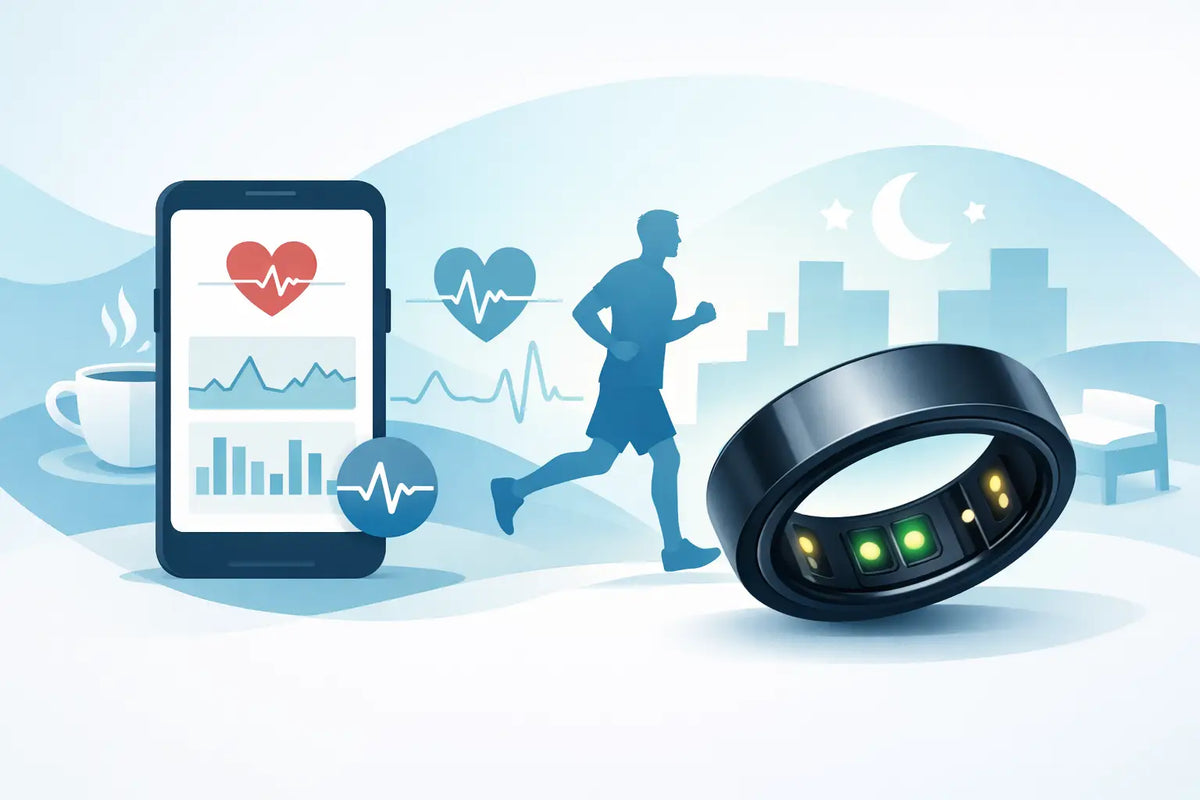
If you want to keep an eye on your heart rate, you no longer need to walk around with a conspicuous watch on your wrist. A smart ring with heart rate monitoring fits better into an everyday life where technology is meant to be useful, but not constantly demand attention. That is exactly what makes it so exciting for many - it is small, stylish, and yet capable of capturing relevant health data directly on the finger.
The appeal lies not only in its size. A ring is something that many people already wear every day. When heart rate monitoring, sleep tracking, and activity analysis are added to that, an accessory becomes a real tool for greater awareness in everyday life. Not clinical, not complicated, but directly usable.
Why a smart ring with heart rate monitoring is in such high demand
Many know the problem with smartwatches: too big when sleeping, annoying when typing, unsuitable for a simple outfit, or simply too conspicuous. A smart ring solves exactly this conflict. It brings health monitoring into a form that is significantly less conspicuous and therefore often worn more consistently.
This is crucial, because good data can only be generated if a wearable is regularly on the body. A ring that fits comfortably and visually matches everyday life has a clear advantage here. Anyone who wears it at the office during the day, on the couch in the evening, and in bed at night gets a much more complete picture than with a device that is regularly taken off.
Especially heart rate monitoring is the entry point for many. Heart rate is easy to understand and at the same time meaningful. It can show how strongly the body reacts to stress, how well you recover at night, or how active a day actually was. A single value does not tell everything yet, but over days and weeks, a pattern emerges that really helps in everyday life.
What a smart ring with heart rate monitoring actually measures
Most people are not looking for lab data, but for orientation. This is exactly where the smart ring plays its strength. It usually measures heart rate via optical sensors, often supplemented by sleep data, movement patterns, and depending on the model, additional health values.
The important thing here is the expectation. A smart ring does not replace a medical device or a medical diagnosis. It is designed to make trends visible. Someone who, for example, sees that their resting heart rate is elevated over several nights can react earlier - for example, with more rest, less late caffeine, or a more conscious evening routine.
This becomes particularly helpful in the interplay of multiple data points. When heart rate, sleep quality, and daily activity are considered together, a picture emerges that is significantly closer to everyday life than an isolated heart rate value. You not only understand what the body is doing right now, but also why.
For whom is a ring more worthwhile than a smartwatch?
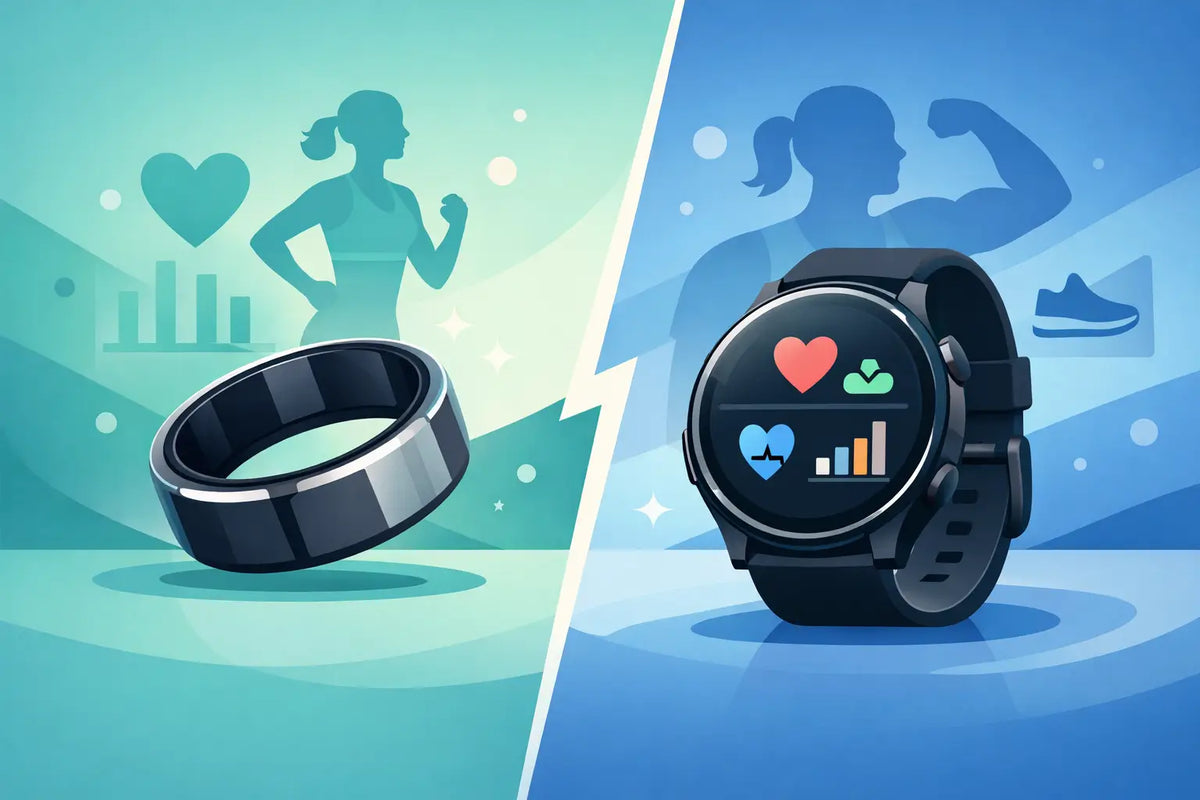
Not everyone needs the same wearable. Anyone who wants to read messages on their wrist, make phone calls, or use apps will often be better off with a smartwatch. Someone who, on the other hand, wants to discreetly track health without constantly having a display on their body will usually find the smart ring to be the more harmonious solution.
This applies especially to people who take sleep seriously. A ring is often significantly more comfortable to wear at night than a watch. It also has advantages in the professional environment. It looks more discreet, distracts less, and blends more easily into a clean, modern look.
In addition, there is a psychological point: A ring accompanies instead of dominating. Many want data about their health, but no technology that constantly blinks, vibrates, and demands attention. Exactly this balance between information and restraint makes the product so attractive.
What really matters with heart rate monitoring
Not every sensor automatically delivers good results. What matters is how consistently and practically a ring measures. The fit plays a major role here. If the ring is too loose, the data collection can become inaccurate. If it fits too tightly, wearing comfort suffers. That is why the right size is not a detail, but the foundation for reliable use.
The everyday situation also counts. During sports with strong hand movements, the values may turn out differently than during rest periods or sleep. This is not a shortcoming of an individual product, but belongs to the reality of wearable sensors. Anyone who knows this evaluates the data more sensibly. It is less about the perfect single moment than about consistent patterns over a longer period.
A good smart ring makes this data understandable. The technology in the background is important, but for users, what matters most is how easily the results can be interpreted. If an app clearly shows when the heart rate was in the normal range, how the night went, or whether the body signals more strain or recovery, technology becomes actual utility.
Design is not a side issue
With wearables, it is often acted as if only technology counts. In everyday life, that is not true. A device that does not visually fit quickly ends up in the drawer. A smart ring must therefore not only measure, but also look good. Exactly in this lies one of its greatest advantages.
It can be combined more easily with your own style than many classic trackers. Anyone who values a minimalist, high-quality appearance will be more willing to wear the ring permanently. And exactly this consistency is ultimately crucial for good health data.
This also explains why modern models in different colors and styles are in demand. Health on the finger works particularly well when it does not feel like a sacrifice. A product that is technically convincing and at the same time looks like a consciously chosen accessory fits significantly better into an active, style-conscious lifestyle.
The purchasing decision: small on the finger, big in impact
A smart ring is not an impulse buy like a phone case. Many ask themselves before buying if the size fits, if tracking really pays off in everyday life, and if the product is comfortable enough for day and night. Exactly these questions often decide whether someone orders or backs out.
That is why services around size finding and risk-free testing are so important. A digital ring measuring tool, free exchange for the wrong size, or a test phase with a money-back guarantee not only lower the hurdle, but also create real trust. Especially with a product that is worn daily, this certainty counts more than aggressive technology promises.
For many buyers, this is the point where interest becomes a real decision. Because the best heart rate monitoring brings little if the ring does not fit. Anyone who makes the entry easy wins not only more orders, but also more satisfied users.
What a good smart ring does better in everyday life
The greatest added value is rarely in a single value. It lies in making habits visible. Anyone who recognizes in the morning that recovery was weaker than expected may plan the day differently. Anyone who finds that late eating or alcohol affects the nighttime heart rate makes more conscious decisions. And anyone who sees that more movement improves sleep gets a motivating connection instead of mere numbers.
Exactly for this reason, a smart ring with heart rate monitoring is more than a technology product for many. It is a silent companion that helps to better understand your own body - without constant display stress and without a bulky design. This form of health monitoring feels more modern because it adapts to life, and not the other way around.
This is also interesting for people who have not worn a wearable before. The entry seems lower because the ring looks less like sports equipment and more like everyday life. This lowers the threshold. You do not have to be a biohacker to benefit from better insights into sleep, heart rate, and activity.
Fitorb hits exactly this point: health data should be useful, but not complicated. Anyone looking for a smart ring that combines heart rate monitoring with style, comfort, and a secure purchasing experience pays attention not only to sensors, but to the overall package.
Smart ring with heart rate monitoring or rather wait?
If you have been wondering for a while why you are often exhausted in the morning, how your body reacts to stress, or whether your daily activity really is enough, then the right time is usually not later. A smart ring does not answer every question immediately. But it makes visible what otherwise easily gets overlooked.
And exactly in this lies its value: not in spectacular features, but in small, reliable signals that help you to manage your everyday life more consciously. When technology becomes so inconspicuous that you like wearing it, it is often most useful.

Leave a comment
This site is protected by hCaptcha and the hCaptcha Privacy Policy and Terms of Service apply.