
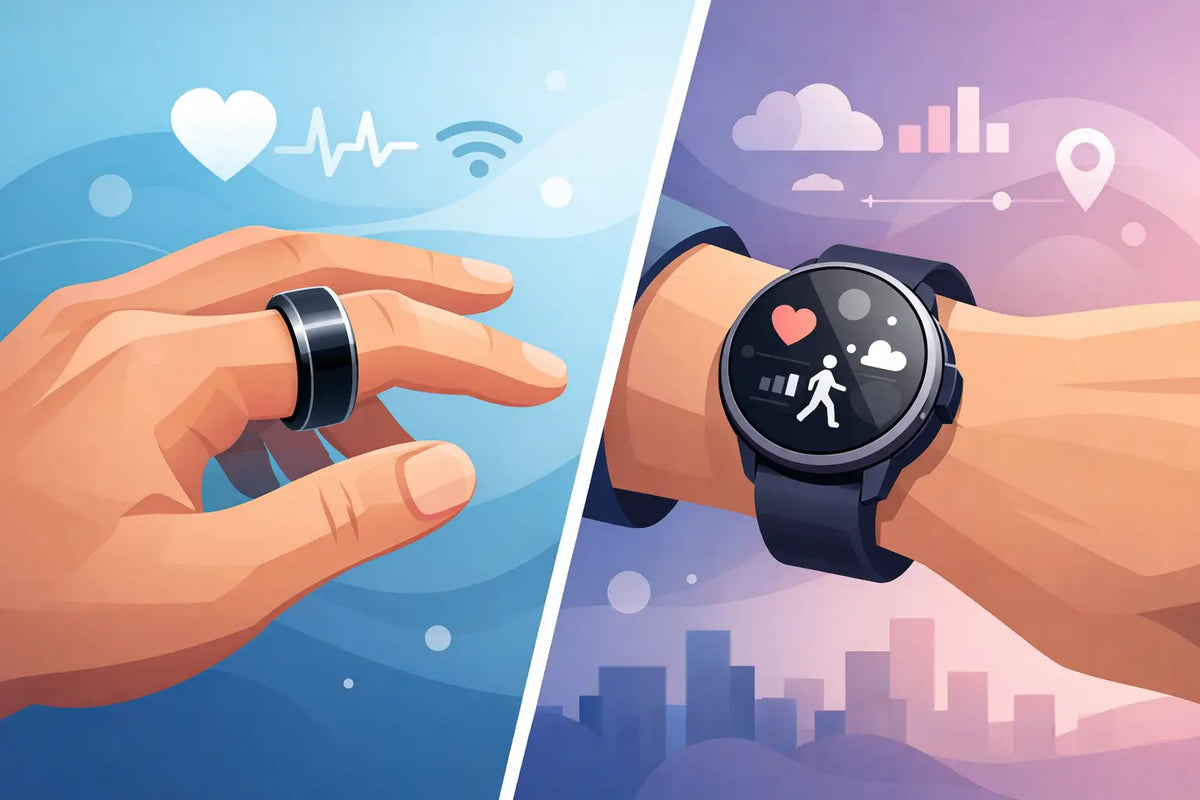
The watch ends up on the nightstand at night because it feels uncomfortable. With an outfit, the display is a distraction. In a meeting, something vibrates on the wrist, and it’s just too much. This is exactly where the question becomes interesting: a smart ring instead of a smartwatch—isn’t that ultimately the much more comfortable solution for everyday life?
For many, the honest answer is: yes, often. Not because smartwatches are bad, but because they show many people more technology than they really want to wear in their daily lives. A smart ring picks up exactly where wearables have often fallen short: it measures discreetly, feels high-quality, and ideally remains so unobtrusive that you hardly notice it after a short time.
A Smart Ring Instead of a Smartwatch—What It’s Really About
Anyone who compares the two product categories solely on features misses the point. The decision is rarely based on sensors or app features alone. It’s made in everyday life. While sleeping, typing, working out, at the office, and going out.
A smartwatch is visible, present, and often a conscious part of digital life. That can be a good thing if you want notifications on your wrist, workout controls, or a larger display. A smart ring takes a different approach. It brings health data closer to the body without demanding attention all day long.
That is exactly what makes it so attractive to many. Anyone who wants to analyze sleep, keep an eye on activity, and use body data more intelligently doesn’t automatically need another display. Often, less technology on the body provides a better user experience.
For Whom a Ring Is the Better Choice
A smart ring is particularly well suited to people who want data but not a high-tech look. Anyone who travels a lot for work, values style, or wears classic watches often views a smartwatch as a compromise. A ring fits in more easily. It looks like an accessory, not a mini-smartphone on the arm.
The ring also has a clear advantage for sleep tracking. Many people don’t like wearing a watch at night. It can be noticeable, dig in, or feel uncomfortable in certain sleeping positions. A ring, by contrast, is often perceived as much more comfortable. And that is exactly what helps create better routines. The best wearable is not the one with the longest list of features, but the one you actually wear every day and every night.
There is also a psychological aspect. A smartwatch is a constant reminder of the digital world. Messages, calls, timers, apps. A ring reduces this barrage of stimuli. It collects data in the background and leaves you with more peace in the foreground.
Where the Smartwatch Still Comes Out on Top
As clear as the advantages of a ring are, there are also areas where the smartwatch remains superior. Anyone who wants to see live data on the display while exercising, reply to messages directly, or use apps on the go simply gets more screen space and more direct interaction with a watch.
For people looking for an all-in-one solution, a smartwatch can also make more sense. It combines fitness, communication, and controls in one device. A ring, by contrast, is more focused. It is not a replacement for every feature of a watch, but a different set of priorities.
That is exactly why the question is not which product is objectively better. The better question is: What do you really want to wear on your body—and what do you actually use?
The Biggest Advantages of a Smart Ring Instead of a Smartwatch in Everyday Life
The biggest advantage is comfort. A well-fitting smart ring is barely noticeable throughout the day. While working on a laptop, sleeping, or going about daily life with changing outfits, it remains discreet. That may sound minor, but it is actually one of the most important reasons to buy.
The second advantage is discretion. Anyone who wants to keep an eye on their health doesn’t always want to make it visible. A ring feels understated and elegant. This is a strong argument, especially for people who want to combine aesthetics and functionality.
The third advantage is consistency. The more comfortable a wearable is to wear, the more likely it will be used long-term. And only then can useful data about sleep, recovery, activity, or daily form be collected.
Finally, style also plays a role. Many smartwatches look sporty or high-tech. That doesn’t suit every occasion. A ring, by contrast, can be worn much more universally—at the office, at dinner, in everyday life, and during workouts.
What Many Underestimate When Buying
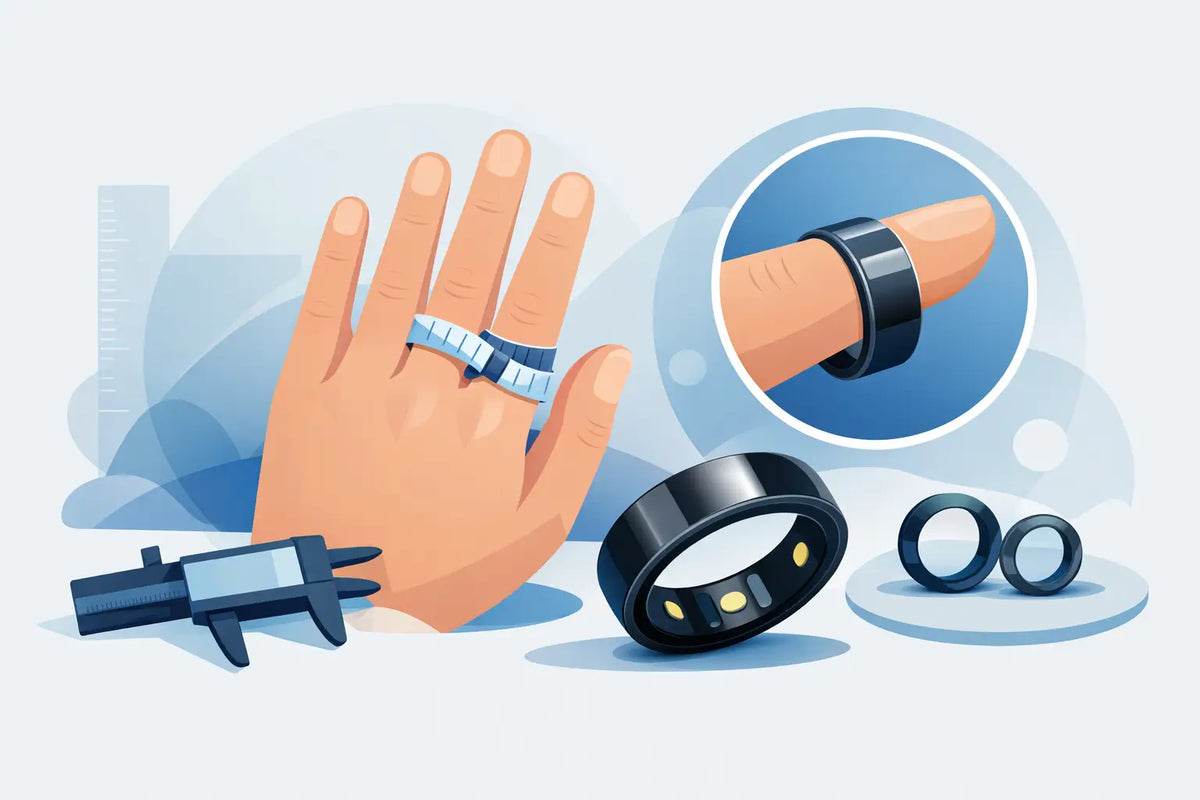
Technology is usually not the biggest hurdle, but fit. A ring must fit correctly, otherwise either comfort or measurement quality will suffer. That is exactly why sizing should not be treated as an afterthought. Anyone who is unsure can benefit from a digital ring-sizing tool or an easy exchange service. This significantly lowers the barrier to purchase.
Another point is expectations. A smart ring is ideal for health and activity data, but it is not designed to replace every classic watch feature. Anyone who understands this from the start is usually more satisfied. Then the purchase becomes not a technical comparison on paper, but a conscious decision for greater everyday practicality.
Design is also often underestimated. Precisely because a ring is constantly visible or noticeable, it should not only be technically convincing but also visually appealing. Colors, surface finish, and shape make a bigger difference in everyday life than many initially think.
A Smart Ring Instead of a Smartwatch for Sleep, Activity, and Well-Being
The real appeal of smart rings lies in making it easier to integrate health data into everyday life. Sleep analyses, activity metrics, and recovery indicators are particularly valuable to many users because they not only show performance but also reveal patterns. You can more easily see how well you are actually recovering, how active your day was, and how your habits affect you.
A ring supports one thing above all else: consistency. It discreetly accompanies you through the day and night. This continuity is often more valuable than a large display with many additional features that are hardly used after a short time.
For many people, that is exactly the turning point. They no longer want to consume more technology, but make better decisions. Sleep earlier. Incorporate exercise more consciously. Better assess stress and recovery. A ring can support this kind of health routine very elegantly.
Why Switching Right Now Makes Sense
The wearable market has changed. In the past, the rule was: more features, a larger display, more attention. Today, many are looking for smarter reduction. Technology should help, not dominate. It should look good, be comfortable, and fit into everyday life.
That is exactly why the ring is gaining so much relevance. It suits a lifestyle that takes health seriously but does not want to constantly show it off. It provides guidance without being loud. And it shows that modern tracking does not have to look bulky.
Brands like Fitorb are tapping into exactly this sentiment. The desire for health monitoring is there, but so are the demands for design, comfort, and a confident purchasing decision. When factors such as free size exchanges, risk-free testing, and easy sizing are added to this, interest quickly turns into genuine everyday practicality.
When You Should Stick with the Smartwatch
If you actively use the display for workouts, reply to messages directly on your wrist, or use many smart features on the go, the smartwatch will probably remain the more suitable choice. The same applies if you already like wearing your watch and are not bothered by its size, weight, or notifications.
If, on the other hand, you are primarily tracking your health, want to better understand your sleep, and are looking for a stylish, discreet alternative, the ring often makes much more sense. It requires fewer compromises in terms of style and usually less adjustment to everyday life.
Ultimately, a smart ring instead of a smartwatch is not purely a technical question. It is a question of comfort, style, and usage. Anyone looking for a wearable that provides data without constantly taking up space will often end up exactly where modern health technology is most compelling: small, elegant, and right on the finger.
The best decision is not the one with the most features, but the one you will still love wearing three months later, just as much as on the first day.


Leave a comment
This site is protected by hCaptcha and the hCaptcha Privacy Policy and Terms of Service apply.