
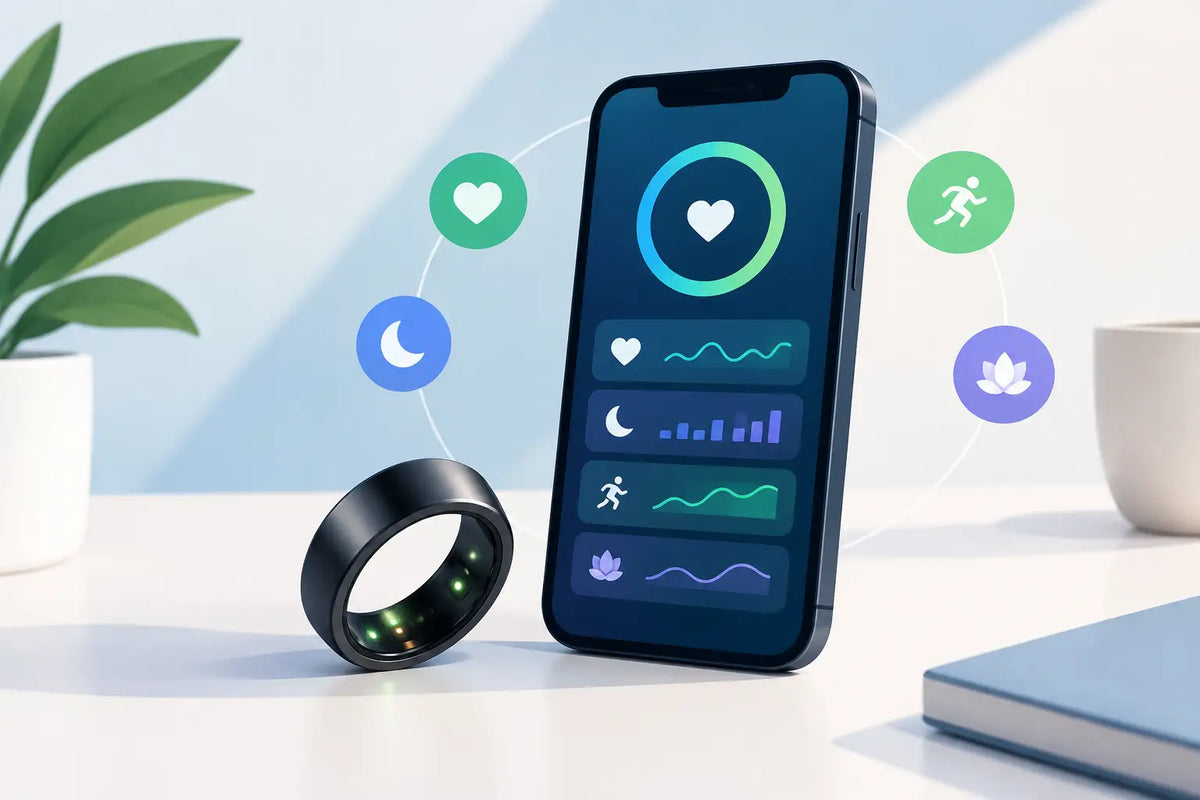
A ring on your finger is barely noticeable. The data it collects day and night, on the other hand, can reveal a lot about your habits. Testing a smart ring app quickly shows: The ring itself is not the only thing that determines whether you will enjoy wearing it. It is the app that turns measurements into insights, allowing you to make sense of your sleep, recovery, and activity.
Those coming from a smartwatch often expect colorful charts, lots of notifications, and as many features as possible. That is not necessarily what a good smart ring app needs to do. Its job is different: it should show you at a glance how your body responds to exercise, rest, and your daily life—without you having to interpret ten different graphs every morning.
What matters in a smart ring app test
A good app does not start with a flood of data, but with clarity. When you open it in the morning, you should quickly understand how your night went, whether your body appears to have recovered sufficiently, and which habit you could keep an eye on today. An easy-to-understand daily score can be helpful, as long as you can also find the key individual metrics behind it.
Clear connections are particularly valuable. For example, if the app shows that a short night's sleep, restless phases, or a late workout coincide with a lower recovery score, a number becomes a practical insight. You do not need to learn medical terminology to make better decisions for your day.
Therefore, in the test, it matters less how many tiles are on the home screen. What counts is whether the presentation remains easy to understand, whether trends over several days can be identified, and whether the recommendations fit your personal daily life.
Sleep data: More than just hours count
For many, the sleep view is the most important reason to wear a smart ring. A compelling app does not just show the total duration, but also breaks down the night: When did you fall asleep? Were there long periods of wakefulness? How regular was your sleep schedule? And how did the night affect your recovery?
Keep in mind: Measurements are for guidance, not a medical diagnosis. No wearable can perfectly assess every moment of a night. Nevertheless, trends can be very revealing. If you notice over weeks that you find it harder to settle down after eating late, drinking alcohol, experiencing stress, or spending time in front of a screen, you have a concrete starting point for making changes.
In the smart ring app test, pay attention to whether you can compare daily scores with weekly and monthly views. A single bad night is normal. Only recurring patterns show whether something is really changing.
Activity should fit your life
Not everyone wants to chase steps or log every workout. For some, it is a walk during lunch break that counts; for others, strength training after work or moving between two appointments. A good app does not just assess activity as performance, but also puts it in relation to your recovery.
This is particularly practical on days when you feel motivated, but your body has not yet fully recovered. Conversely, a good recovery score can be a small nudge to become more active again. The best apps do not push you, but help you develop a realistic sense of exertion and rest.
Also check how easily activities can be recorded. Automatic detection can be convenient, but it is not always accurate. The ability to edit entries later or manually add a workout makes the data significantly more meaningful in the end.
The best data is only useful if the app remains simple
A smart ring app accompanies you every day. That is why small details quickly become important: Can you find your most important metrics without searching for a long time? Does the synchronization load reliably? Are terms explained clearly? And does using it on your smartphone feel pleasant?
A clear design is not just a nice-to-have. If the app seems complicated, you will check it less often after a few weeks. Then even precise data will go unused. Good apps focus on clear priorities: today, your progress, and concrete insights. Those who want to dive deeper should be able to find additional details without being overwhelmed as a beginner.
Notifications also require a delicate touch. Reminders can be helpful, for example to encourage movement or synchronize a measurement. However, too many push notifications can quickly feel like additional stress. Ideally, you should be able to decide for yourself what the app can tell you and when.
Personalization makes the difference
Two people can have the same sleep duration and feel completely different. That is why rigid ideal values are only limitedly helpful. The longer you wear a ring, the more the app should take your personal baseline into account.
This applies to resting heart rate, heart rate variability, sleep rhythm, and activity level. Not every low or high value is automatically good or bad. What is often relevant is the deviation from your usual pattern. A smart app helps you recognize these changes instead of unsettling you with general comparisons.
If you are new to health data, give yourself some time. The first few days provide an impression, but it is only after several weeks that more reliable personal trends emerge. This is exactly where the advantage of a discreet ring lies: You can wear it continuously without it feeling like another device.
Accuracy: What you can realistically expect
A smart ring sits close to the skin and can therefore comfortably capture many metrics. Nevertheless, ring size, fit, cold hands, movement, or individual physical differences affect the measurement. The ring should fit comfortably but securely. If it slips constantly or pinches, not only is your comfort affected, but possibly also the data quality.
That is why it is worth not guessing the size. A digital ring sizing tool or a size set removes uncertainty from the decision. Fitorb combines this service with free exchanges for the wrong size—a sensible approach, because a ring that really fits is more likely to be worn long-term.
Having the right expectations is also important: The app does not replace a medical diagnosis and should not be used for self-diagnosis. However, it can make changes visible that you might otherwise overlook. In case of persistent symptoms, unusual values, or concerns, seeking medical advice is always the right next step.
Do not overlook privacy and compatibility
Health data is personal. Therefore, testing a smart ring app should also include a look at data management. Is it clearly explained what information is stored? Are there transparent settings for your account? Can you delete or export data if needed?
Compatibility is just as crucial. Before purchasing, check whether the app works with your smartphone and operating system and what the requirements for updates are. A great app is of little use if the connection is unstable or if you lose time during every synchronization.
Those who want to bundle their data with other health or fitness services should also check whether a suitable integration is available. This is not a must for everyone. However, if you already use several apps, it can significantly simplify your daily life.
Who is a smart ring app really worth it for?
A smart ring app is particularly well suited to people who want to monitor their health more consciously without constantly looking at a display on their wrist. It is a great choice if you want to understand sleep patterns, better assess recovery, and evaluate daily activity more realistically. Especially in the office, when going out, or at night, a discreet ring is often more comfortable than a large watch.
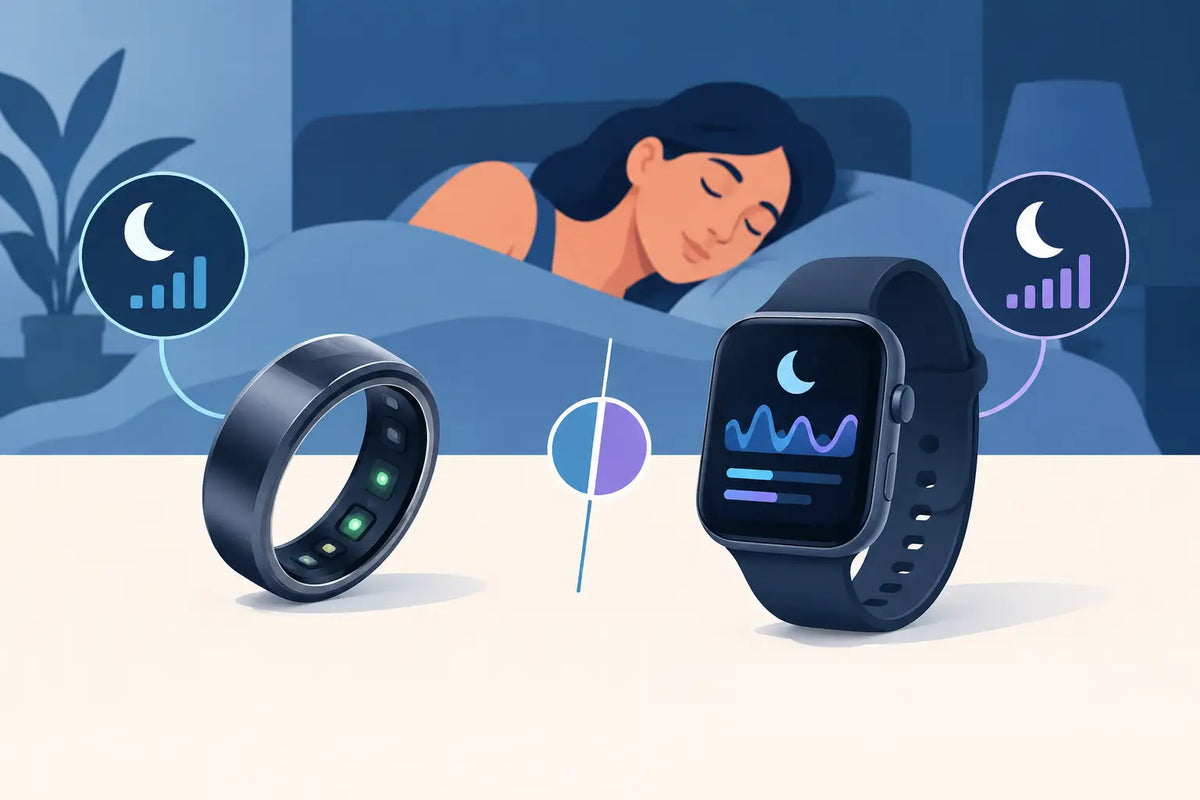
It is less suitable if you want to see live metrics on your wrist while exercising, answer messages, or control extensive training plans directly from the wearable. In that case, a smartwatch remains the more suitable choice depending on the sport. A smart ring sets different priorities: discreet comfort, long-term patterns, and a clear view of your well-being.
The best app is not the one with the most metrics. It is the one you open regularly, whose insights you understand, and that motivates you to make small, manageable changes. When a sleep graph leads to an earlier end to the workday or a recovery score prompts a mindful break, health monitoring on your finger truly becomes practical for everyday life.

Leave a comment
This site is protected by hCaptcha and the hCaptcha Privacy Policy and Terms of Service apply.