
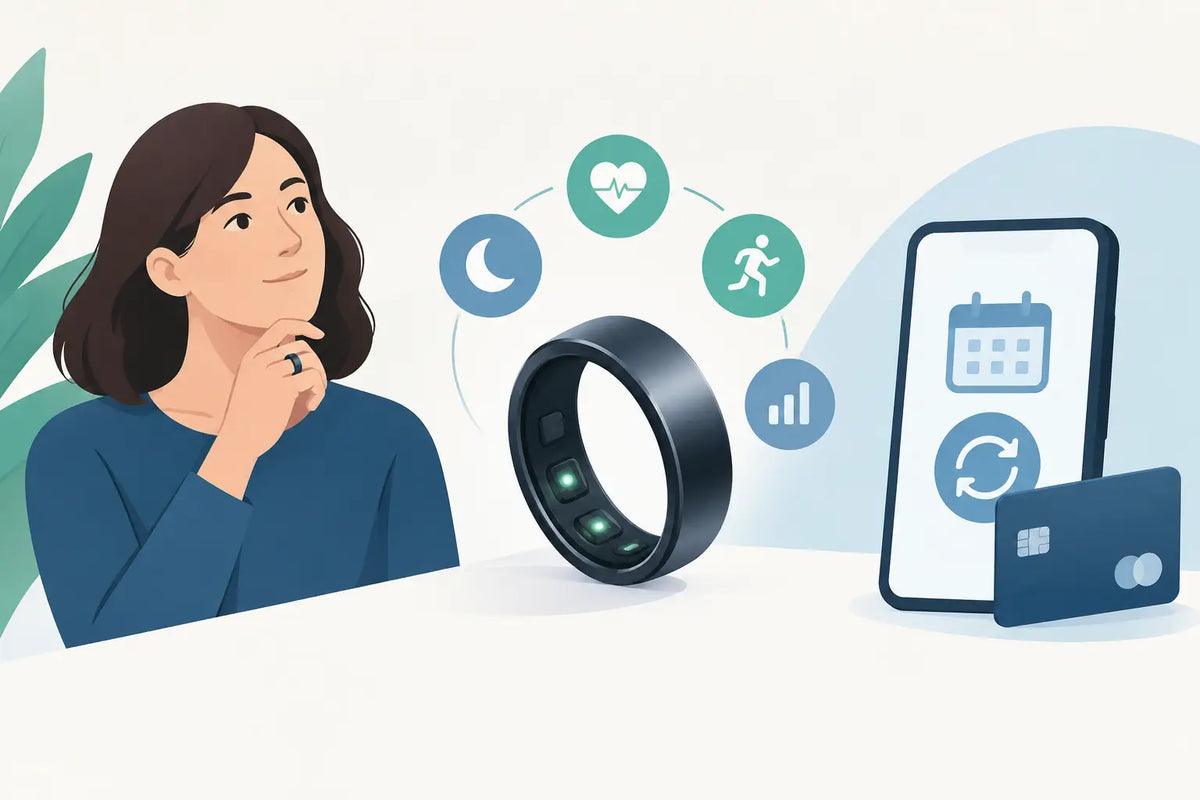
A smart ring should make your well-being visible, not raise new questions every month. But does a smart ring need a subscription for sleep data, activity, and recovery to be truly useful? The honest answer is: not necessarily. Whether ongoing costs apply depends on the manufacturer and which data and analysis you expect.
For many people, a ring is appealing precisely because it sits discreetly on the finger, is comfortable to wear even at night, and doesn't constantly look like a smartwatch. Before you choose a model, it pays to take a close look at the pricing structure. A low purchase price can become expensive in the long run if the most important insights are only unlocked after purchasing a subscription.
Does a smart ring need a subscription for basic functions?
The sensors in the ring collect your data directly on your body. Depending on the model, this includes heart rate, sleep duration, movement, temperature trends, or blood oxygen saturation. A subscription is not technically necessary for the ring to measure. The real question is: What does the app show you without an additional monthly fee?
With some providers, you only see basic metrics like steps, sleep time, or your current heart rate without a subscription. For more detailed sleep stages, trends over weeks, a recovery score, or personalized insights, a recurring payment is required. Other smart rings provide the full analysis with the purchase. This means you pay once for the hardware and app access, rather than continuously for your own health data.
Both options can make sense. A subscription model can be worthwhile if the provider regularly develops new analysis features, offers personalized programs, or provides very in-depth analysis. However, if you mainly want to better understand your routines, monthly additional costs are often not necessary. In that case, a smart ring without a mandatory subscription is the more predictable choice.
What a smart ring subscription can actually fund
A monthly fee is not automatically a disadvantage. App development, data analysis, and new features incur costs. Reputable providers often invest in better trends, clearer recommendations, and updates that can make the ring even more valuable after purchase.
The key is whether you actually use this added value. If you just want to quickly check how well you slept in the morning and keep an eye on activity and heart rate during the day, you don't need an overly complex analysis platform. On the other hand, if you want to optimize sleep, training load, and recovery based on data over the long term, you can benefit from deeper insights.
Pay attention to how transparently a provider communicates. Good product pages clearly show which features are included in the purchase price, what costs extra, and whether there is a free trial period. Terms like "full insights" or "premium analysis" should be explained clearly. You should know before purchasing whether the exact features you want the ring for will later be locked behind a paywall.
One-time payment or monthly payment: Which is right for you?
The best choice depends less on a general judgment than on your daily life. Calculate not only the purchase price, but the total cost over one or two years. An affordable ring with an ongoing fee can end up costing significantly more than a model with a slightly higher initial price and a permanently usable app.
Therefore, ask yourself three simple questions: Do you only want clear health metrics and easy-to-understand trends? Do you want regular coaching and deeper analysis? And does it bother you to pay every month for features you may hardly open after a few weeks?
If you want an uncomplicated overview, a ring without a subscription or with comprehensive basic features is usually the more relaxed solution. You keep your spending under control and can use the ring exactly how it fits your life. For demanding biohacking enthusiasts or people with very specific training goals, a subscription can, on the other hand, provide real added value—provided the analyses are understandable and not just nicely packaged numbers.
What to look for before purchasing
The term "no subscription required" sounds clear, but can mean different things. Check the details instead of relying solely on a major advertising claim. These points make the difference:
- Free core features: Are sleep, activity, heart rate, and daily overviews available without an additional fee?
- Historical data: Can you track developments over several weeks and months without purchasing a subscription?
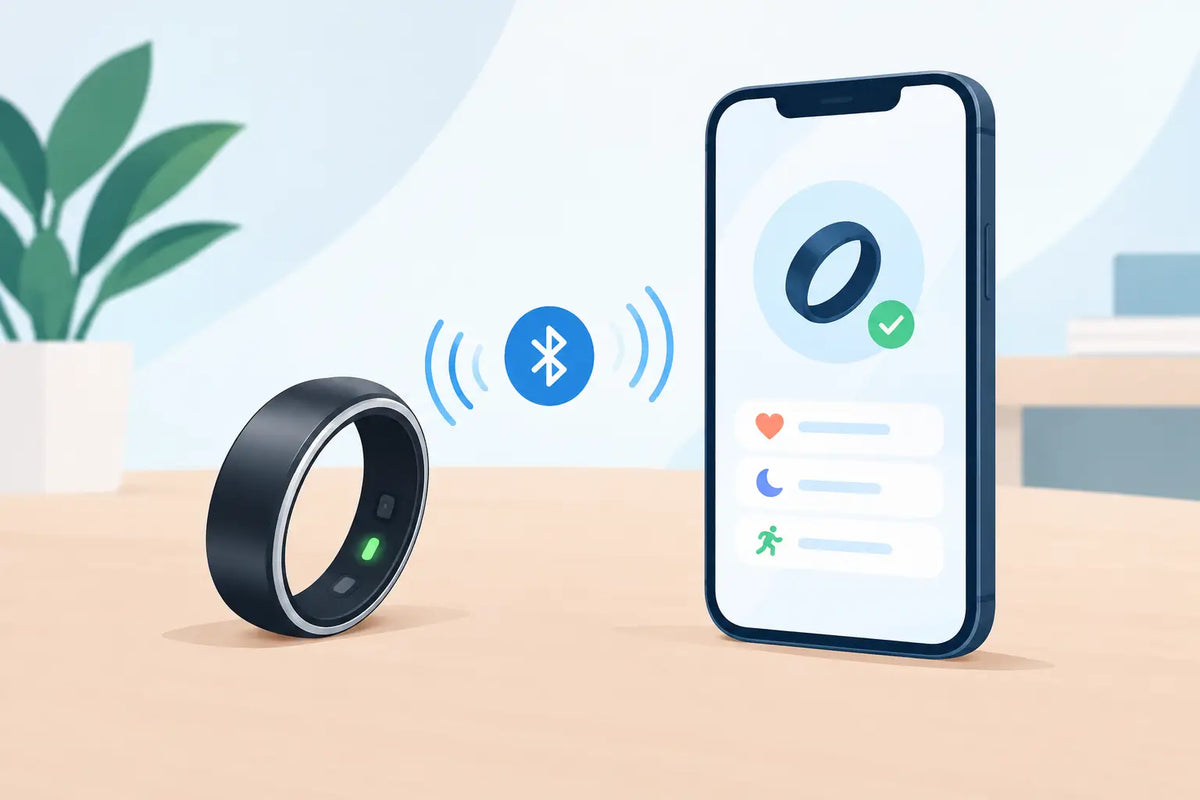
- App compatibility: Does the app work reliably with your smartphone, and is it easy to understand?
- Battery and everyday usability: A ring only provides useful patterns if you can wear it regularly.
- Size and returns: If the ring fits poorly, comfort and measurement quality suffer. A digital measuring tool, free size exchange, and a trial period significantly reduce this risk.
Which data do you really need?
Many product descriptions advertise a long list of metrics. This sounds impressive, but is not automatically helpful. Health data only becomes valuable when you can derive a clear course of action from it: go to bed earlier, take breaks more seriously, adjust your training, or consciously wind down after a stressful day.
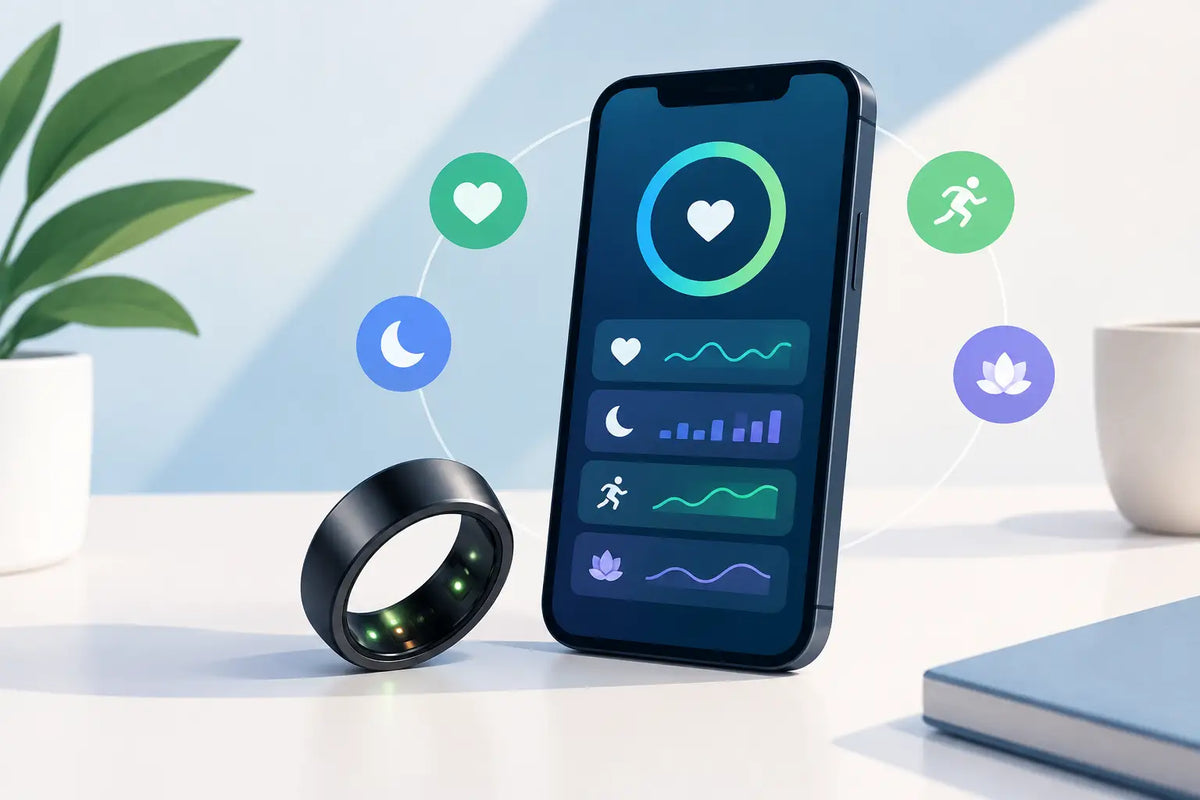
For most users, a few reliable metrics are more than enough. Sleep duration and sleep rhythm help identify recurring patterns. Activity metrics show whether you are getting enough exercise in your daily life. Heart rate and recovery trends can give you a sense of when your body needs more exertion or rest. These metrics are not a substitute for a medical diagnosis, but they can significantly sharpen your awareness of your own daily life.
A good smart ring does not turn this information into complicated science. It clearly shows you what stands out and gives you guidance without requiring you to study ten charts every morning. That is exactly its advantage over devices that collect a lot of data but seem unnecessarily complex in everyday life.
Be careful with supposedly free offers
"No subscription" does not always mean "no additional costs." Some manufacturers charge for additional reports, data exports, or features that appear free initially. Others change their app models later. Therefore, also look at the experiences of other buyers and whether the provider describes its terms clearly and understandably.
Customer service is just as important. If synchronization doesn't work, a size needs to be exchanged, or you have questions about your data, you don't want to spend a long time looking for help. Easily accessible support, fair returns, and a clear warranty are just as relevant for a health and lifestyle product as sensors and battery life.
The right decision feels easy
A smart ring is a good investment when it fits naturally into your daily life and provides information you actually use. Do not let yourself be pressured into a subscription that promises more than you need. At the same time, you don't have to rule out a good optional model if the additional analysis demonstrably helps you.
Choose the ring whose pricing structure fits your habits: transparent costs, understandable data, comfortable wear, and enough security when purchasing. Then your health on your finger remains exactly what it should be: personal, stylish, and without unnecessary surprises.

Leave a comment
This site is protected by hCaptcha and the hCaptcha Privacy Policy and Terms of Service apply.