
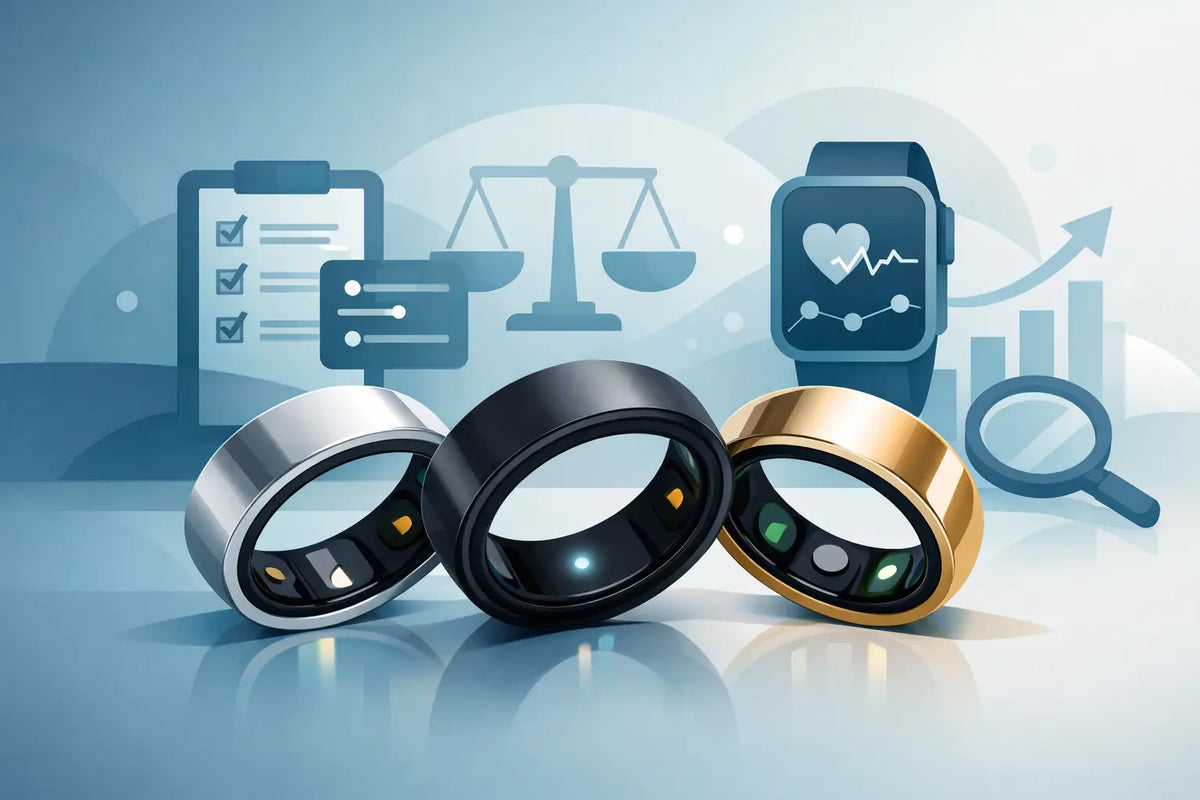
Anyone looking for a smart ring comparison has probably had enough of bulky watches on their wrist. The real question is not just which ring measures data, but which one feels good in everyday life, looks good, and is actually used in the long term. That is what determines whether a smart ring is a clever health tool or ends up in a drawer after two weeks.
Smart Ring Comparison: The Spec Sheet Isn't the Only Deciding Factor
At first glance, many smart rings sound similar. Sleep tracking, step counting, heart rate, app connectivity—almost every model promises the most important basics today. But in everyday life, the differences show up in other areas: How comfortable is the ring to wear for hours? How accurate are the readings during exercise and at night? How easy is the app to understand? And how simple is the purchase if you aren't sure of your ring size?
A good smart ring must do more than pack technology into a small space. It should be discreet, fit seamlessly into your day, and provide health data without requiring constant attention. This is precisely the appeal for people who do not want to wear a smartwatch.
What You Should Really Look for in a Smart Ring Comparison
1. Comfort Is Not a Minor Issue
A smart ring is worn around the clock—at work, while sleeping, walking, and often during workouts. That is why the best sensors are of little use if the ring is too thick, too heavy, or uncomfortable in the wrong place.
It is important that the model is neatly finished on the inside and fits the right size. Too loose means inaccurate data. Too tight means pressure points, especially at night or in warm weather. This is exactly where a convincing product separates itself from one that only looks good in product photos.
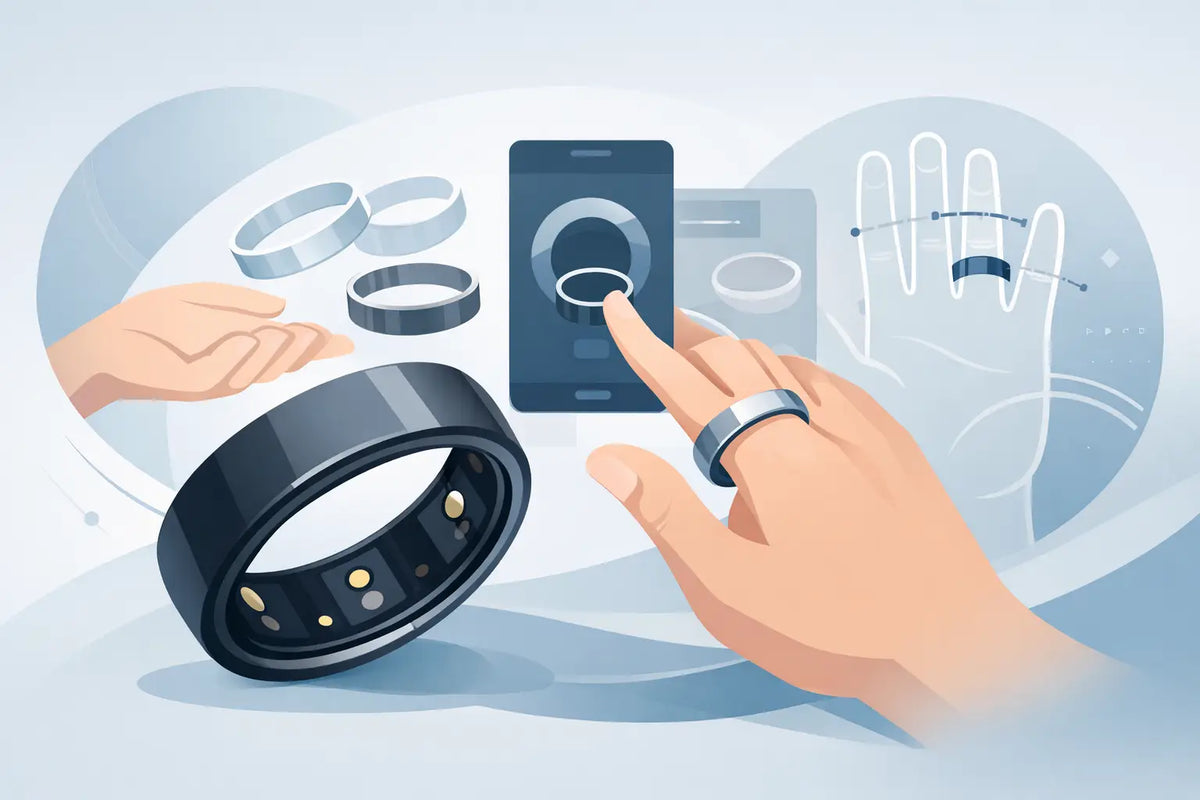
If a provider takes the sizing question seriously, it often shows how customer-oriented the overall offering is. A digital ring-sizing tool or an easy exchange for the wrong size removes one of the biggest purchasing hurdles from the start.
2. Sleep Tracking Must Be Easy to Understand
Many people do not buy a smart ring primarily for steps, but for better sleep. This makes sense because the finger is often very well suited for nighttime measurements. Nevertheless, simply seeing a number in the morning is not enough.
Good systems show how long you slept, how regular your sleep rhythm is, and whether your night was restful or restless. Even more important, however, is that the app processes this data in a way that allows habits to be formed. Anyone who only sees raw data all the time will eventually stop using the feature.
A practical smart ring helps you recognize patterns. For example, that late meals, alcohol, or irregular bedtimes directly affect sleep quality. That is exactly when data becomes truly useful in everyday life.
3. Activity Data Should Motivate, Not Annoy
Not everyone wants to chase training records every day. For many, it is more about better understanding movement, building routines, and living more active overall. Therefore, in a good smart ring comparison, the question of how practical the activity tracking really is plays a major role.
A smart ring is ideal for people who want discreet tracking. No large display, no constant distractions, no technical statement on the wrist. Instead, the tracking runs in the background. This is particularly well suited for professionals and everyone who likes technology but does not want to be constantly reminded of it.
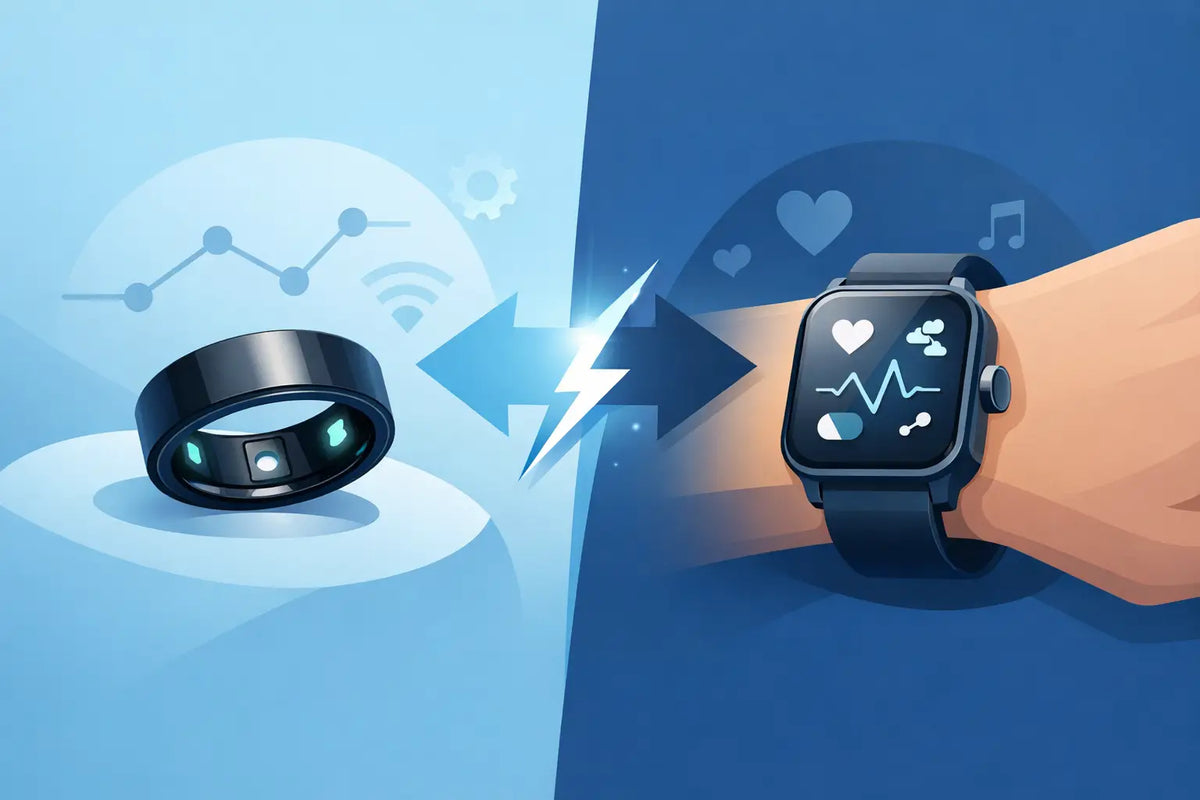
The downside: For very specific sports analysis, other wearables are sometimes more capable. Anyone who wants to see marathon training data in real time on the display is often better served by a sports watch. On the other hand, anyone who wants to keep an eye on daily activity, recovery, and sleep will benefit significantly more from the discreet ring form.
4. Battery Life and Charging Determine the Routine
A device that constantly needs to be charged will rarely become a firm habit. In the smart ring area, a solid battery life is therefore more than a comfort feature. It influences whether you collect consistent data over weeks or regularly have gaps in your history.
It is not only the pure runtime that is important, but also how easy the charging process is. A compact charging case or an uncomplicated charging solution makes a difference. Because the lower the hurdle, the more likely the ring will remain part of your daily routine.
5. The App Is Half the Experience
You see little on the ring itself. That is why the app decides almost everything. It should be clearly structured, present data in an understandable way, and be usable without technical prior knowledge. Especially in the lifestyle and health area, an overloaded app brings no added value.
A convincing system guides users intuitively through sleep, recovery, and activity. It shows trends instead of just individual data points and makes progress visible. Anyone who can measure their values but does not understand them will quickly lose motivation.
6. Design Is Not a Minor Issue for a Ring
A smart ring is not a classic tracker that you only put on for training. It is part of your personal style. That is why the question of whether the design fits everyday life always belongs in a smart ring comparison.
Many people want to capture health data without the device immediately standing out as a technology product. This is exactly where the strength of a well-designed smart ring lies. It looks minimalist, high-quality, and wearable—in the office, when going out, and at the gym.
Colors, surfaces, and the overall shape matter more than you initially think. A ring that looks good will be worn more reliably. And only then will truly meaningful data be generated.
For Whom Is a Smart Ring Particularly Worth It?
A smart ring is ideal for people who want to better understand their well-being without constantly looking at a display. If you want to recognize sleep patterns, keep an eye on activity, and more smartly assess your recovery, the format is particularly attractive.
It is also worth it for everyone who finds smartwatches too conspicuous, too sporty, or simply too impractical. Especially in professional life, with minimalist looks, or in situations where a discreet wearable is more comfortable, the ring plays to its advantages.
It is less suitable for users who are primarily looking for a training device with live displays. Then a sports watch usually takes center stage. A smart ring is more of a quiet companion for the whole day—not the loudest coach during a workout.
Price, Service, and Purchase Security Also Count
Many people only look at the price at first. Understandable, but shortsighted. A cheap ring is not automatically the better deal if the app, comfort, or service disappoints. Conversely, a higher price seems significantly fairer if shipping, sizing help, exchange, and the trial period are right.
Especially with wearables, purchase security is a real factor. No one wants to guess the size or be left on their own in case of a problem. That is why it is worth looking at whether the provider offers free sizing support, fast support, and a fair return policy. That makes the difference between a risky impulse buy and a secure decision.
A modern provider like Fitorb addresses exactly that: with elegant design, a focus on everyday health data, and service points that make getting started easier. This is not a minor detail on the sidelines, but part of a smart overall experience.
How to Make the Right Decision in a Smart Ring Comparison
You make the best choice not by looking at the longest feature list, but by looking at your everyday life. Ask yourself what you will really use. Do you want to better understand your sleep? Develop more awareness of movement? Wear a discreet wearable instead of a watch? Then comfort, app quality, battery life, and sizing service are often more important than any technical buzzword.
It is also helpful to look honestly at your own routine. Anyone who only uses technology regularly when it works simply should choose a model that can be integrated without effort. Anyone who values style should make no compromises on design. And anyone who wants security when buying online should take service and return options just as seriously as sensors.
In the end, a good smart ring does not feel like a gadget, but like a natural part of the day. That is exactly what you should choose for—because the best health data only matters if the ring is still on your finger tomorrow.

Leave a comment
This site is protected by hCaptcha and the hCaptcha Privacy Policy and Terms of Service apply.