
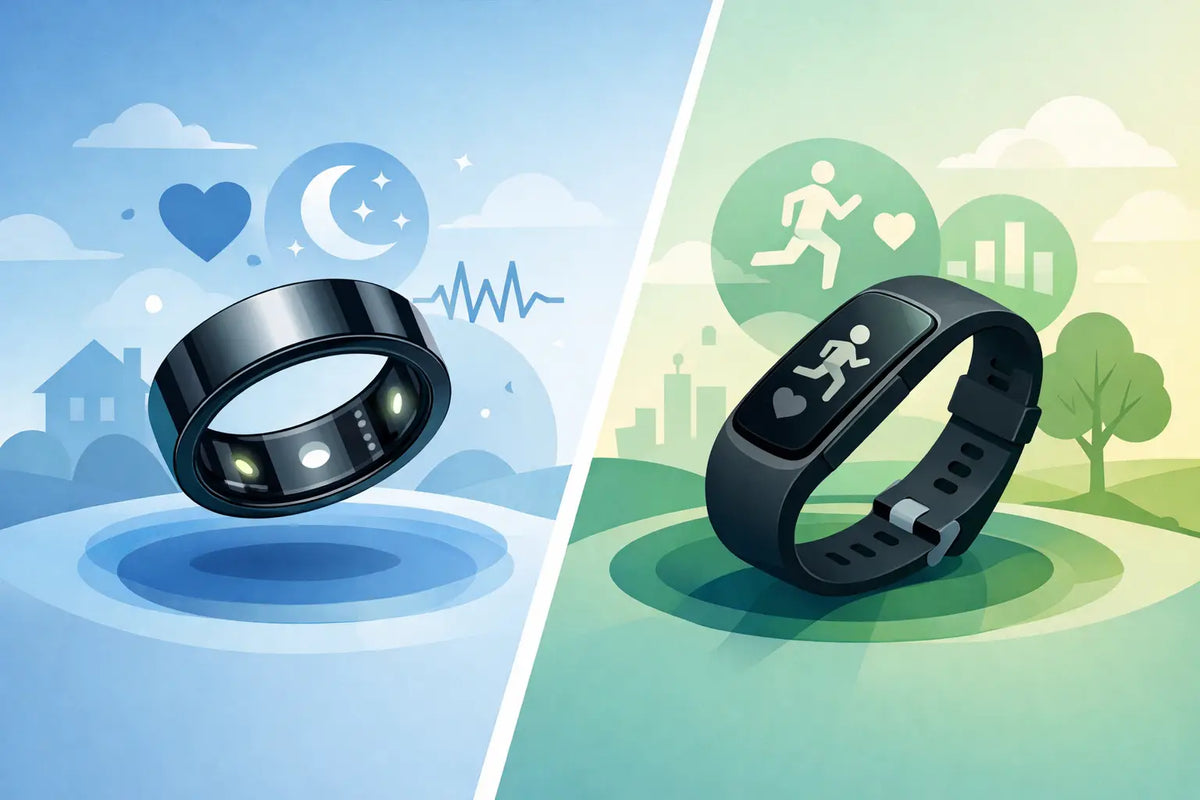
Anyone who wants to track their health will quickly face this exact question: smart ring versus fitness tracker. On paper, both measure steps, sleep, and activity. In real life, however, something else decides—how well the device fits into your everyday life, how often you actually want to wear it, and whether it feels like technology or a natural part of your day.
Smart Ring versus Fitness Tracker—What Really Matters
Many people buy wearables based on the spec sheet. More sensors, more features, more displays. That sounds sensible, but it often leads to the wrong product. After all, a tracker is only useful if it is worn continuously—at the office during the day, while you sleep at night, during workouts, and on relaxing days too.
This is exactly where the difference lies. A fitness tracker sits visibly on the wrist, is usually designed for sports, and is often functional rather than elegant. A smart ring is much more discreet. It measures close to the body, barely stands out in everyday life, and is a better fit for people who want to track their health without constantly wearing a technical device on their arm.
The better choice is therefore not automatically the model with the longer feature list. The better choice is the wearable you won’t want to take off after two weeks.
The Biggest Difference: Comfort and Everyday Suitability
A fitness tracker is practical if you want to actively check a display during a workout. Pace, heart rate, or timers are visible right away. Anyone who likes to monitor runs, stop workouts, or read notifications on their wrist gets a clear advantage here.
In the rest of everyday life, things are often different. Many users find trackers noticeable after a while, especially at night, in the office, or with formal clothing. Then there is the visual aspect: a plastic strap with a focus on technology does not suit every style or every occasion.
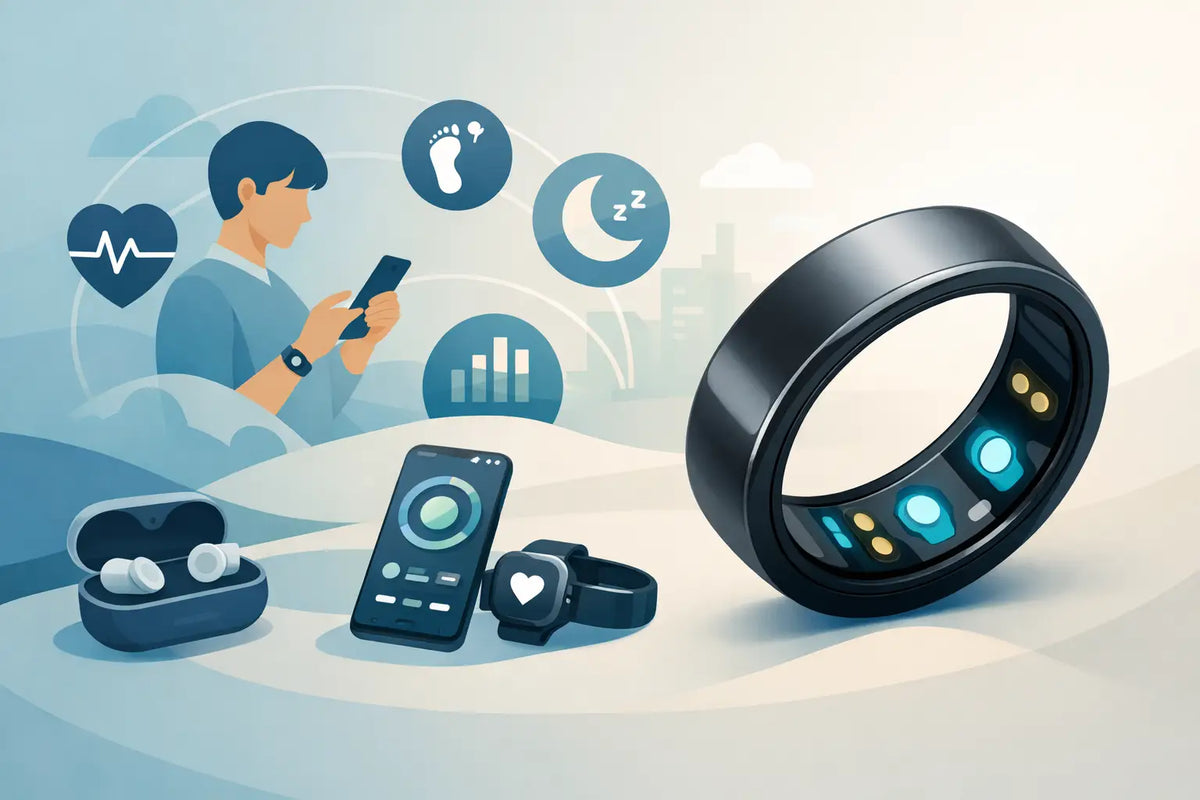
A smart ring plays to its strengths where technology should be inconspicuous. It is small, lightweight, and feels more like an accessory than a device. This makes a big difference if you want to collect sleep data, monitor activity in the background, and better understand your health without constantly being reminded that you are currently tracking something.
For many professionals, that is exactly the deciding point. Not another screen. Not another gadget that demands attention. But health data that comes along with you as everyday life continues.
Sleep Tracking: Here Less Is Often More
Anyone who wants to improve their well-being almost always ends up focusing on sleep. And this is exactly where you can see how practical a wearable device really is. Because sleep tracking only works if the wearable is comfortable to wear at night.
Fitness trackers have a bit of a conflict in this area. They can track sleep, but they are not always comfortable enough to be worn every night. The band can get in the way, the casing can press against you, and some users simply take it off at some point.
A smart ring is often the more relaxed solution for this. Thanks to its compact shape, it is much less noticeable while you sleep. This increases the chance that data will be collected consistently over weeks and months. And only through this consistency do useful patterns emerge—such as how late meals, stress, or restless evenings affect your recovery.
If your focus is on sleep quality, recovery, and daily habits, a ring is often closer to what people actually use in the long term.
The Fitness Tracker Has Visible Advantages During Sports
Let’s be clear: If you are very training-oriented, often check live data, and want to actively operate your device during sports, a fitness tracker remains more practical in many cases. The display provides direct feedback, and some models offer training modes, route functions, or tighter integration with sports apps.
A smart ring is less of a classic training display and more of a quiet health companion. It measures, documents, and shows connections without constantly demanding interaction. For ambitious athletes focused on real-time data, that may not be enough. For people who want to move more, understand their everyday life, and improve their recovery, this approach is often more than enough.
The decision therefore depends heavily on how you use data. Do you want to constantly look at it during a workout, or understand later how your day affected your body?
Design Is Not a Minor Issue
Many manufacturers treat design as an extra. For buyers, however, it is one of the main reasons for or against a wearable. After all, what impresses technically must also suit your clothes, appointments, and personal style.
Fitness trackers almost always send a sporty signal. That is not wrong, but it is clearly positioned. Anyone who likes this look will be satisfied with it. Anyone looking for something more discreet will quickly reach its limits.
A smart ring feels more mature, minimalist, and versatile. It can be worn at work, out and about, and in quiet everyday situations without looking like a training device. Especially for people who appreciate technology but do not want a tech look on their body, this is a real added value and not a luxury detail.
This makes health tracking not only functional but wearable in the truest sense of the word.
Smart Ring versus Fitness Tracker in Terms of Comfort and Habit
The most interesting comparison is often not technology versus technology, but habit versus habit. A device can be objectively good and still rarely worn. Then its usefulness is wasted.
Wrist trackers compete with watches, jewelry, long sleeves, sleep comfort, and sometimes your own sense of style. A ring competes above all with the right size and the personal feel on your hand. That is why the fit is particularly important here. If a smart ring fits correctly, it almost disappears in everyday life. If it fits poorly, you will notice it constantly.
That is exactly why a simple size finder before purchase is so crucial. It lowers the hurdle and turns an interesting idea into a product that is really worn every day. Fitorb addresses exactly this point—with a digital size guide and a free exchange if the ring size is wrong. That sounds like service, but in the end, it is above all one thing: practical.
For Whom a Smart Ring Is the Better Choice
A smart ring is a particularly good fit for people who want to better understand their health without changing their everyday life. If you want to analyze sleep, keep an eye on activity, and improve habits, but do not want a visible device on your wrist, the ring is usually the more elegant solution.
It also works when aesthetics are non-negotiable for you. Many buyers do not want a wearable that looks like a gym, but one that suits business, leisure, and dinner equally. That is exactly where the ring gains relevance.
In addition, there is a psychological advantage: discreet technology is less likely to be perceived as a nuisance. This increases the chance that short-term interest will become a long-term habit.
For Whom a Fitness Tracker Remains More Practical
A fitness tracker is still a strong choice if your focus is clearly on training. If you frequently accompany sports with a direct display, start workouts, view intermediate results, or want to use notifications on the device, the wrist plays to its strengths.
People who like a classic wearable feel and deliberately want to wear a visible technology product can also be very happy with a tracker. It is not the inferior category—just a different one.
The deciding factor is being honest about your own usage. Buy for your real everyday life, not for the version of yourself that might start tracking everything perfectly next Monday.
The Best Choice Is Often the One You Forget
That may sound surprising at first, but in practice, it makes perfect sense. The best wearable is not the one that makes the loudest impression. It is the one that reliably comes along, collects data, and helps you make better decisions without constantly demanding attention.
For exactly this kind of everyday life, a smart ring is the more modern solution for many people. It combines health data with comfort, discreet design, and usage that feels effortless rather than technically overloaded. A fitness tracker remains practical if training, live data, and direct operation are the priorities.
So if you are torn between the two, do not first ask yourself which device can do more. Instead, ask yourself which one you will put on in the morning, continue to wear at night, and still enjoy using after a month. That is usually where the most honest answer lies—and often the better decision for your health on your finger.
In the end, it is not about owning even more technology, but about wearing the right technology so naturally that healthier habits almost develop as a side effect.


Leave a comment
This site is protected by hCaptcha and the hCaptcha Privacy Policy and Terms of Service apply.